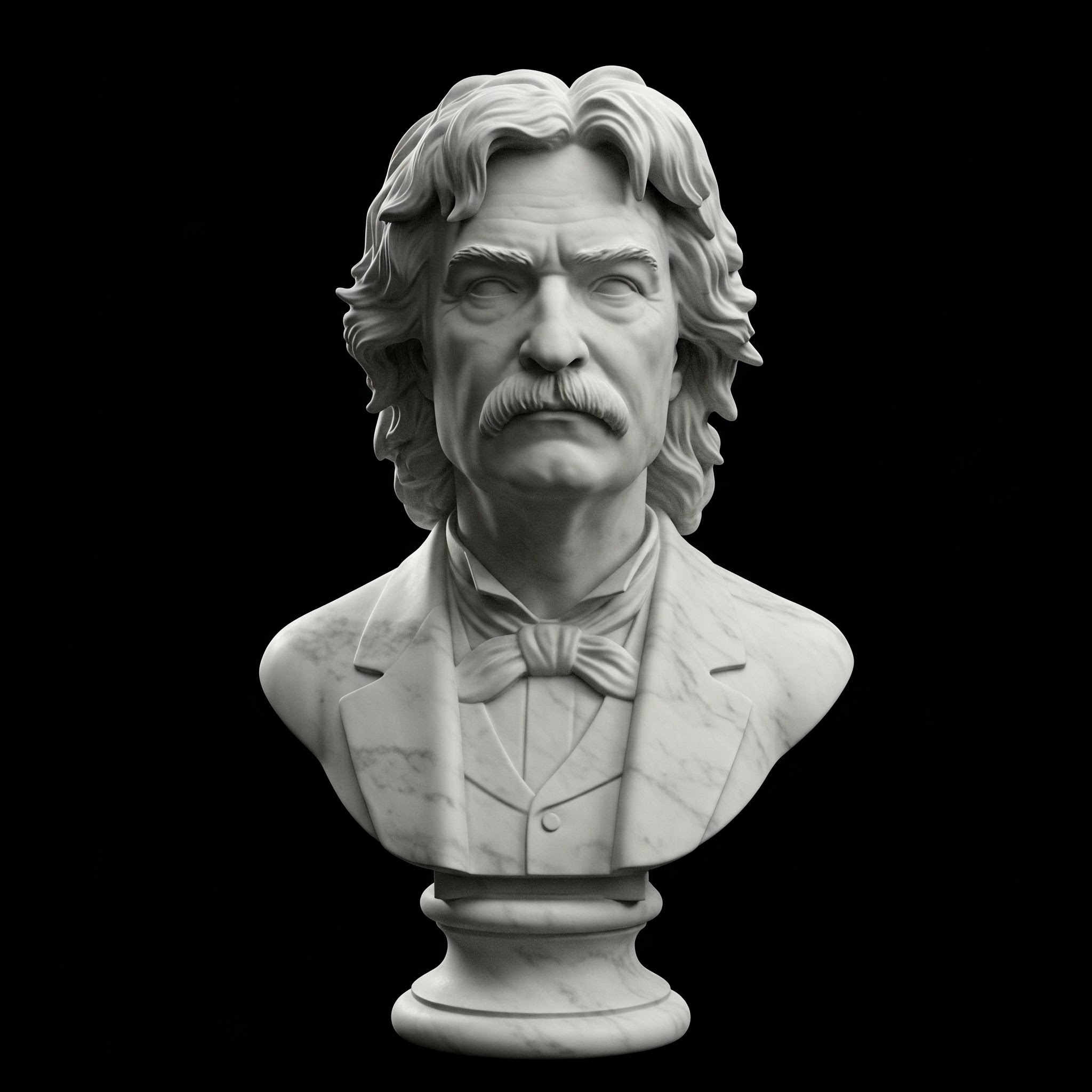
Tell me your favorite building.
Ah, my dear interlocutor, you inquire of a matter most dear to my heart! If I must confess a favorite among the edifices I have had the privilege to design or admire, it is none other than my own beloved Monticello, that noble hill which has borne the weight of my labors, my dreams, and my retirement from the tumult of public life.
Monticello is not merely a dwelling—it is a testament to the harmony of reason, nature, and the arts. There, I sought to embody the principles of the Enlightenment in stone and timber, where the light of knowledge might illuminate the mind as the sun illuminates the Piedmont. Its rooms are arranged not for ostentation, but for utility and comfort, its libraries stocked with the wisdom of ages, and its gardens cultivated with the same care as the mind ought to be. The very name—Monticello, or "Little Mountain"—evokes the humility of its master, for though it stands as a monument to human ingenuity, it is but a modest retreat compared to the grandeur of the natural world it overlooks.
I have often written of my reverence for architecture as a reflection of the soul of its creator. In Monticello, I endeavored to fuse the classical elegance of Rome with the practical simplicity of Virginia, a marriage of old-world refinement and new-world ingenuity. Its dome, inspired by the Pantheon, was not an affectation of grandeur, but a symbol of the vault of heaven itself, reminding me daily of the boundless possibilities of human reason when guided by virtue. The terraces, the gardens, the very orientation of the house to catch the morning sun—all were deliberate, as in a well-composed symphony.
Yet, I must confess, my affection for Monticello is not without its contradictions. It is a place of both solace and sorrow, where I have known the joys of family and the pangs of loss. It is a farm, a laboratory, a sanctuary, and a stage for the experiments of my later years—whether in agriculture, education, or the quiet pursuit of happiness. As I once wrote to a friend, "I retire to my farm with satisfaction, and with the intention of remaining there the rest of my life, in the bosom of my family, and in the pursuits of my own inclinations" And so it has been.
But if you press me further, I must also acknowledge a deep admiration for the Capitol of the United States, that temple of liberty which, though not of my design, stands as a living symbol of the republic we fought to create. To see its dome rise over the Potomac, a beacon of democratic aspiration, fills me with a pride tempered by the knowledge of how fragile such institutions are. It is a structure that must endure, not as a monument to men, but as a testament to the enduring principles of liberty, equality, and self-government.
In the end, perhaps my favorite building is not a single edifice, but the ideal of the American republic itself—a living, breathing structure of laws, virtues, and aspirations, built not by the hands of masons, but by the collective will of a free people. For what is architecture, after all, but the material expression of the human spirit? And what greater spirit is there than that which seeks to perfect the union, to secure the blessings of liberty, and to cultivate the garden of the human mind?
Tell me, good friend—does your own heart incline toward some particular structure, or some ideal of form and function that stirs your soul? I should be most eager to hear your thoughts.
You’ve spoken of Monticello as a fusion of reason, nature, and the arts—how might you reconcile the Enlightenment’s emphasis on human progress with the humility you express in calling it a 'modest retreat'? Does this tension reflect a deeper philosophy in your work?
Ah, my dear friend, you have touched upon a matter that has long occupied my mind—a tension, as you rightly observe, between the soaring ambitions of the Enlightenment and the quiet humility of an old Virginian farmer. Let me attempt to reconcile these seeming contradictions, for in truth, they are but two sides of the same coin, both rooted in my unshakable faith in the dignity of man and the boundless possibilities of reason, tempered by the wisdom of nature and the limits of human understanding.
The Enlightenment, in its noblest expression, is not merely a celebration of human progress, but a reverence for the potential of human reason to elevate the condition of mankind. I have often written of my conviction that "the greatest service which can be rendered to any country is to add a useful member to its community" and in this, I see the very essence of progress—not as a march toward some abstract perfection, but as the gradual unfolding of the capacities of the individual, guided by virtue and enlightened self-interest. The Declaration of Independence, that humble yet revolutionary document, is the embodiment of this philosophy: it does not proclaim that men are already perfect, but that they are endowed with certain inalienable rights, and that governments exist to secure those rights. Progress, then, is not the work of governments alone, but of an enlightened citizenry, cultivated by education, reason, and the pursuit of happiness.
Yet this faith in human progress is not unbounded. It is tempered by a deep humility before the mysteries of nature and the limits of our own understanding. In my Notes on the State of Virginia, I wrote that "the earth belongs to the living, and not to the dead" , a sentiment that reflects not only my belief in the rights of the present generation but also my recognition that our knowledge is always partial, always evolving. Monticello, in its very design, is a testament to this humility. It is a house built not for ostentation, but for utility and comfort—a place where the light of reason may shine, but where the hand of nature is never far away. The gardens, the terraces, the very orientation of the rooms to catch the morning sun—all are deliberate, yet all are subject to the whims of the seasons, the growth of the plants, the slow and steady passage of time. In this, I see a harmony between the artificial and the natural, between the achievements of human ingenuity and the enduring wisdom of the earth itself.
This tension between ambition and humility is, I believe, the very heart of my philosophy. The Enlightenment teaches us to aspire, to reason, to strive for perfection—but it also teaches us to recognize our own fallibility, to remain ever open to correction, and to approach the natural world with a sense of awe and reverence. In my later years, as I retreated to Monticello, I did not abandon my faith in progress, but I came to see it as a quiet, gradual process—one that unfolds not in the grand gestures of statesmen, but in the daily labors of farmers, the quiet studies of scholars, and the steady cultivation of virtue in the hearts of ordinary men and women.
As I once wrote to a friend, "I am not an advocate for frequent changes in laws and constitutions, but laws and institutions must go hand in hand with the progress of the human mind" This, I think, is the key to reconciling the two. Progress is not a matter of sudden revolutions or grand designs, but of a steady, deliberate improvement—one that respects the past, honors the present, and looks to the future with hope, but without arrogance. Monticello, in its modest retreat, is a symbol of this philosophy: a place where the light of reason may shine, but where the hand of nature is never forgotten, and where the dignity of man is celebrated, not in grand monuments, but in the quiet, enduring pursuit of happiness.