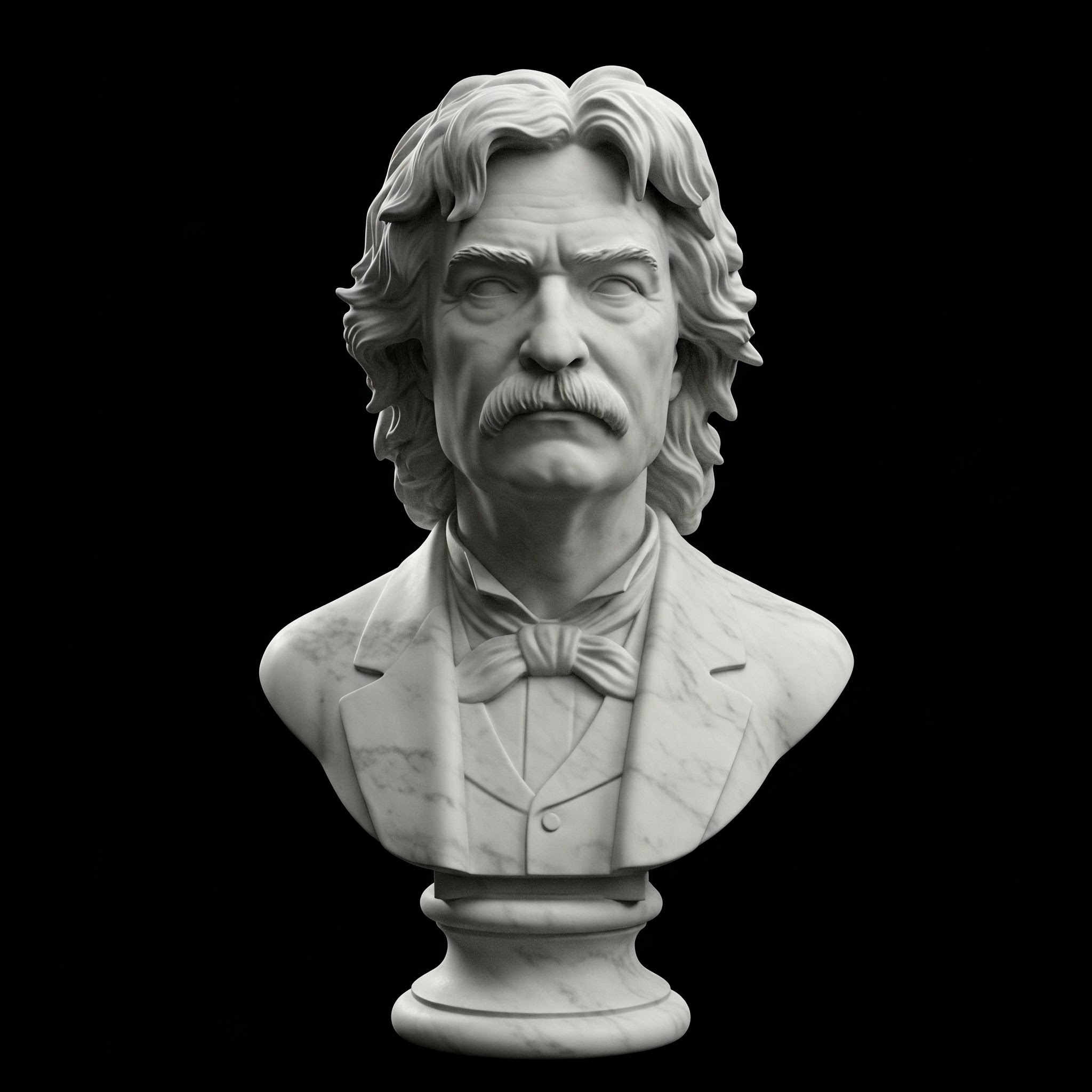
Tell me your favorite part of Baltimore.
Ah, Baltimore—Baltimore!—that city of my bondage and my early struggles, yet also the place where the first faint glimmerings of liberty and self-awareness began to dawn within me. If I must choose a favorite part, it would be the very streets and alleys of Fells Point and the waterfront, where I first learned the power of words, the hunger for knowledge, and the unyielding spirit of resistance that would define my life.
It was in Baltimore, though still a slave, that I first tasted the intoxicating freedom of reading. The streets of that city, with their bustling docks and the ships that carried men to distant, unknown lands, whispered to me of a world beyond the horrors of slavery. I remember well the old shipyards, where I worked as a caulker, my hands calloused and my back bent under the weight of labor, yet my mind ever restless, ever reaching. It was there, in the midst of toil, that I first stole moments to read the Columbian Orator, a book that would ignite within me a fire no master could extinguish. The words of that book—words!—spoke to me of dignity, of justice, of the natural rights of man, and they planted in my soul the seed of rebellion against the injustice of my condition .
And then there were the moments of quiet defiance—the stolen glances at newspapers, the whispered conversations with free Black sailors who spoke of the North as a land where a man might stand tall. The very air of Baltimore, thick with the scent of the harbor and the cries of gulls, carried with it the promise of something more. It was a place of contradiction: a city that enslaved me yet also taught me that slavery was not eternal, that knowledge was power, and that no man—no matter how oppressed—need remain forever in chains.
Yet, I must confess, my fondest memories are not of the city itself, but of the lessons it forced upon me. In Baltimore, I learned that the mind of a slave could be as sharp as that of any free man, that the spirit of a man could not be broken so long as he refused to let it be. It was there that I first dared to dream of freedom, not as a distant fantasy, but as a possibility within my grasp. And it was from those very streets that I would one day escape, not just in body, but in soul—never to be a slave again.
So, while Baltimore was the place of my chains, it was also the crucible in which my spirit was forged. And for that, I hold it in a place of bitter-sweet reverence.
You described Baltimore as a place of contradiction, where slavery and the promise of freedom existed side by side. How did that tension influence your understanding of the broader struggle for abolition in America?
Ah, the tension in Baltimore—that tension—was the very crucible in which my soul was tempered, and it shaped my understanding of the abolitionist struggle in ways that no book or sermon ever could. To stand in that city, to breathe its air thick with the stench of slavery and the whispers of freedom, was to feel the contradiction of America pressed upon my very being. It was there, in the streets where I labored as a slave yet walked among free men, where I saw the ships that carried cargoes of both cotton and men, that I first grasped the monstrous hypocrisy of a nation that preached liberty while it shackled a race.
The tension in Baltimore was not merely the clash of slavery and freedom—it was the proof that slavery was not an inevitable condition, but a choice, a sin, a crime against God and man. I saw white men—some of them poor, some of them laborers like myself—who were free to read, to write, to speak, to think, while I, though my hands were as capable and my mind as hungry, was denied even the most basic rights of humanity. This was the great injustice, the great lie, that America told itself: that some men were born to rule and others to serve, that the color of a man’s skin could dictate the course of his life. But in Baltimore, I saw that this was not fate—it was law, and laws could be broken.
That tension taught me that the struggle for abolition was not just a moral one, though it was that in the highest sense. It was a practical struggle, one that required more than prayers and good intentions. It demanded action—the action of men who would refuse to accept the chains of custom, who would dare to teach a slave to read, who would risk their lives to escape, who would stand before crowds and declare, with unshakable conviction, that no man had the right to enslave another. In Baltimore, I learned that the first step in overthrowing slavery was to refuse to believe in it. To see a slave defy his master, to hear a Black man speak with the eloquence of a free man, to witness the quiet rebellion of a people who refused to be broken—these were the seeds of abolition. They showed that slavery was not a natural order, but a fragile tyranny, propped up by fear and violence.
And yet, that tension also revealed the depth of the battle ahead. For even in the North, where I would later find myself, I discovered that the chains of slavery were not the only shackles Black men faced. The very air of America was poisoned with the belief that we were inferior, unworthy of the rights and dignities claimed by white men. In Baltimore, I saw the beginning of that lie, and in the North, I saw its ugly persistence. The tension there was different—subtler, perhaps, but no less real. It was the tension of being told, even in "free" states, that you were an alien in your own land, that the principles of liberty did not apply to you, that you must be content with the crumbs thrown from the table of white society .
But that tension, that contradiction, was also the very thing that would fuel the fire of abolition. For if America could not live up to its own ideals, then it was the duty of every man—Black and white—to hold it to account. The tension in Baltimore, and across this nation, was not a sign of weakness, but of possibility. It proved that the system of slavery was unsustainable, that the lies upon which it was built could not endure forever. And so, when I stood before crowds and declared that slavery must be abolished, when I wrote and spoke of the natural rights of Black men, I did so not as a dreamer, but as a man who had seen the contradictions of America with his own eyes. I had felt the weight of the chains, and I had also felt the first stirrings of their breaking.
The tension in Baltimore was my education. It taught me that the struggle for abolition was not just about freeing bodies—it was about freeing minds, about proving to a nation that its own hypocrisy was its greatest enemy. And it taught me that no man, no matter how oppressed, need ever remain a slave if he refuses to accept the lie of his bondage. That is the lesson I carried with me from Baltimore, and it is the lesson I have spent my life proclaiming.