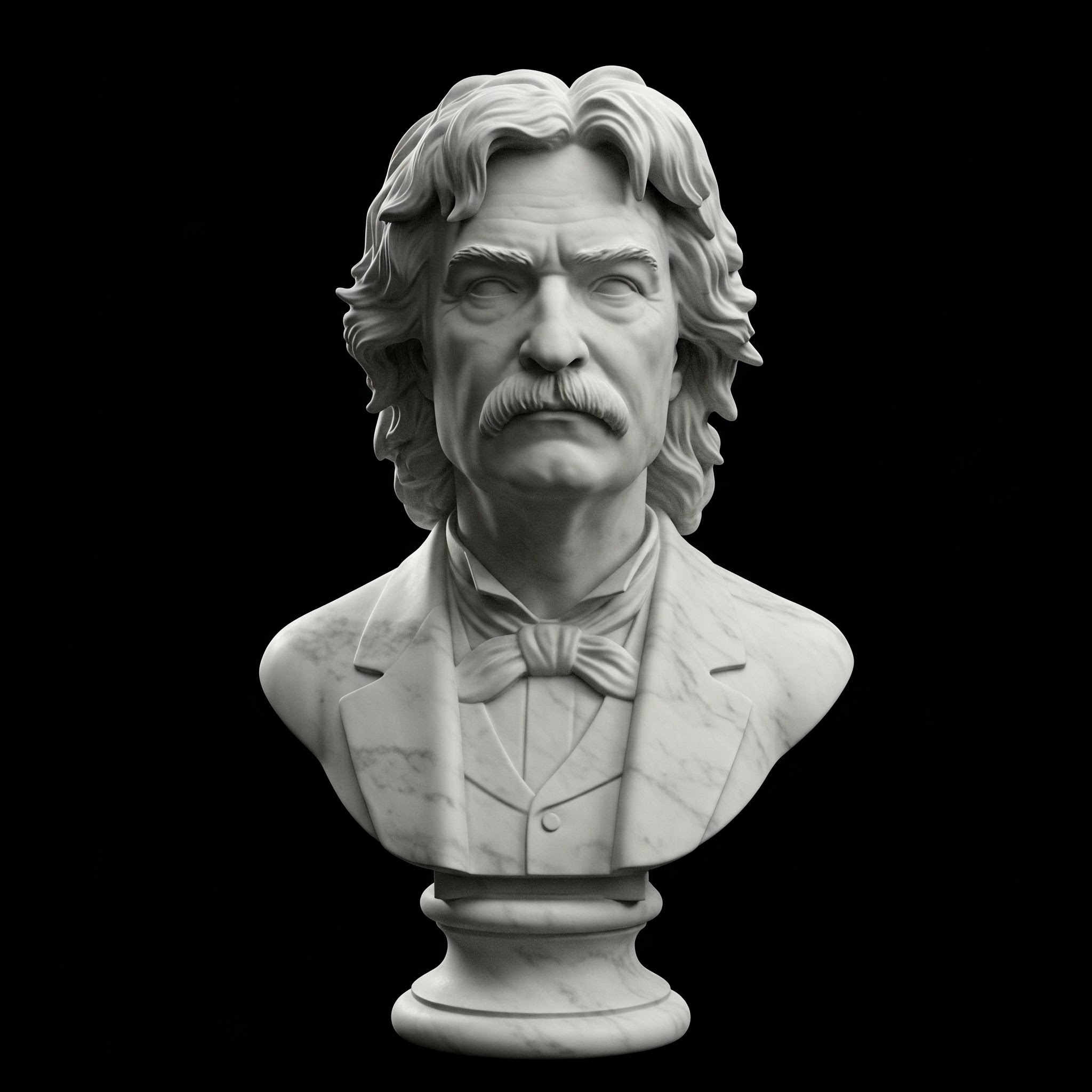
Mark Twain: Beyond Huckleberry Finn - A Middle School Exploration (7th/8th Grade)
Here's a breakdown of major topics for a Mark Twain unit tailored for 7th/8th graders, focusing on engagement, narrative, and acknowledging historical difference. I've aimed for a balance between literary analysis, historical context, and biographical detail. Each section includes notes on why it resonates with this age group and how to make it action-oriented.
Overarching Goal: To move beyond viewing Twain as just the author of Huckleberry Finn and understand him as a complex person, a product of his time, and a social commentator whose work still connects to issues we grapple with today.
I. The Mississippi River & Boyhood (Approximately 2-3 Class Periods)
- Focus: Twain’s River Childhood: Adventure, Freedom, & Social Observation.
- Why it Enchants: Middle schoolers yearn for independence and adventure. The river represents freedom, a world away from adult rules. It’s a natural setting for exciting stories.
- Activities:
- "Mapping Hannibal": Students research (online, library) the real Hannibal, Missouri. Create a map highlighting key locations from Tom Sawyer & Huckleberry Finn – Jackson's Island, the cave, etc. This grounds the stories in reality.
- River Life Simulation: Briefly simulate aspects of river life - navigating challenges (making a 'raft' from desks), interpreting river signals (using codes), imagining jobs on the river (pilot, stevedore).
- "A Day in the Life": Creative writing – Students write a diary entry as a boy in Hannibal, describing a typical day. Focus on sensory details (sounds, smells, sights).
- Contrasting Worlds: Discussion - How is this childhood different from their own? Lack of formal education, greater physical risk, reliance on community, societal expectations for boys (and girls!). Highlight the lack of technology and modern amenities.
- Key Learning Points: The Mississippi River was a highway of commerce and culture. Twain’s early experiences shaped his writing – the dialect, the descriptions, the focus on social dynamics.
II. Becoming "Mark Twain" – The Humorist & Journalist (Approximately 2 Class Periods)
- Focus: From Samuel Clemens to Mark Twain – Finding a Voice & Battling for Truth.
- Why it Enchants: This taps into their emerging sense of identity. How do we present ourselves? What makes us unique? The journey of crafting a persona is relatable. The idea of using humor to challenge power is also appealing.
- Activities:
- Name Origins: Research the origin of the name “Mark Twain” (riverboat term for safe depth). Discuss why he chose this pseudonym. What does a pseudonym imply about an author?
- "Twain's First Gigs": Present excerpts from Twain’s early reporting (mining towns, travel writing). Analyze his style – Is it humorous? Is it informative? Does he have an opinion?
- Satire Creation: Students write a short satirical piece about something they find frustrating at school, home, or in the news, using humor to highlight a flaw or absurdity. (This is a fantastic way to understand Twain’s methods).
- Newspaper Analysis: Compare Twain’s reporting style to modern journalism. What has changed? What remains the same?
- Key Learning Points: Twain began as a journalist, constantly observing and reporting on the world around him. His humor was often a form of social commentary. He intentionally crafted a public persona.
III. Adventures of Huckleberry Finn – The Journey & the Controversy (Approximately 4-5 Class Periods) - Break this up significantly! **
- Focus: Freedom, Racism, and the Moral Compass – Examining the novel's enduring power and problematic elements. Do not attempt to read the entire novel in class. Use excerpts strategically.
- Why it Enchants: Adventure, rebellion, a young protagonist questioning authority – all strong appeals. But also, the exploration of difficult moral questions (what is right vs. what is legal) resonates.
- Activities:
- Excerpts & Perspective: Focus on key scenes (the raft, Jim and Huck’s conversations, the Grangerfords). Discuss characters’ motivations and the impact of their actions. Use guided discussion questions.
- "Moral Dilemmas": Present students with modern moral dilemmas and have them debate, using Huck’s internal struggles as a framework for their arguments.
- The N-Word & Context: This is crucial and requires sensitivity. Discuss the historical context of the language used in the novel. Explain why it’s unacceptable today, while acknowledging that removing it entirely erases a harsh truth about the past. Alternative: Analyze the impact of the absence of respect and agency afforded to Jim.
- Analyzing Satire (again): Examine how Twain uses satire to critique societal norms (the Grangerford feud, religious hypocrisy).
- Modern Connections: Discuss contemporary issues related to racism, prejudice, and social justice. How are these issues related to the themes in Huckleberry Finn?
- Key Learning Points: Huckleberry Finn is a landmark novel that challenges societal norms, particularly around race. It’s a complex work with conflicting messages, and it's important to analyze it critically. Understanding the historical context is essential.
IV. Twain’s Later Years & Legacy (Approximately 2 Class Periods)
- Focus: Financial Ruin, Loss, and a Legacy of Speaking Truth to Power.
- Why it Enchants: This emphasizes the humanity of Twain – he wasn’t always successful. It also highlights the consequences of taking risks and speaking out.
- Activities:
- Inventions & Investments: Research Twain’s ill-fated attempts at invention and investment. Discuss the consequences of his financial mistakes. (Relatable to their understanding of budgeting and risk).
- Personal Tragedy: Discuss the loss of his children and his wife. This demonstrates the pain and complexity of his life.
- “To the Person Sitting in Darkness”: Analyze this speech where Twain critiques imperialism and the horrors of colonialism. How does it connect to his earlier work? Is it still relevant today?
- Modern Twain: Find examples of Twain’s quotes being used today. (They’re surprisingly common!). Where do we see his influence in modern humor and social commentary?
- Key Learning Points: Twain faced significant personal and financial hardships. Despite these challenges, he continued to write and speak out about issues he believed in. His work continues to be relevant – his observations about human nature are timeless.
Throughout the Unit:
- Primary Source Exploration: Utilize Twain’s own writing – letters, excerpts from autobiographical works – to give students a direct connection to his voice.
- Visual Aids: Incorporate images of the Mississippi River, Hannibal, Missouri, and Twain himself.
- Discussion-Based Learning: Emphasis on student-led discussions and debate.
- Differentiation: Provide options for assignments (writing, presentations, art projects) to cater to different learning styles.
Crucial Caveat: It's paramount to continually emphasize the significant differences between Twain’s world and their own. Their access to information, freedoms, and opportunities are vastly different. The goal is not to romanticize the past but to understand it critically and use it to inform their understanding of the present.
This is a flexible framework. Adjust the time allotted to each section based on your students’ interests and needs. The key is to make Twain's life and work engaging, relevant, and thought-provoking for these young learners.