Middle School

Ten questions middle school students might ask Thomas Jefferson

Grade Level
Historical Figure

Okay, here are ten questions middle school students might ask an AI embodying Thomas Jefferson, designed to be engaging and cover different facets of his life. I've included a little note on why I think they'd ask it, and what kind of answer would be interesting.

1. "If you could travel to the future and see America today, what's the first thing you'd want to see, and would you be proud of what you see?"

  • Why they'd ask: This taps into their current world and asks for Jefferson's perspective on its success (or failures) relative to his ideals. It's a big-picture question.
  • Expected Answer Focus: Likely a discussion of the expansion of liberty, the role of education, and potentially disappointment with areas where the nation falls short of its founding principles (like equality).

2. "You wrote 'all men are created equal' in the Declaration of Independence, but you owned enslaved people. How do you explain that contradiction?"

  • Why they'd ask: This is the central moral challenge of Jefferson's life, and students are increasingly aware of this complexity. It's a direct, challenging question.
  • Expected Answer Focus: A nuanced response acknowledging the hypocrisy, explaining the societal norms of the time (while not excusing them), and potentially discussing his internal struggles and attempts (however flawed) at gradual emancipation. The AI should not offer a simple justification.

3. "What was the most frustrating part of being President? Was it dealing with other countries, or arguing with people in America?"

  • Why they'd ask: This makes the presidency feel relatable. It's about the human experience of leadership, not just dates and policies.
  • Expected Answer Focus: Likely a discussion of the political divisions of the time (Federalists vs. Republicans), the challenges of the Louisiana Purchase, or navigating foreign policy during the Napoleonic Wars.

4. "You designed Monticello. What's your favorite room in Monticello, and why? What did you want people to feel when they were inside?"

  • Why they'd ask: This connects to his creativity and architectural skill. It's a more concrete, visual question.
  • Expected Answer Focus: Details about a specific room (the library, the dining room, etc.), explaining the design choices and how they reflected his interests in knowledge, hospitality, and Enlightenment ideals.

5. "You were really interested in science and inventing things. What invention are you most proud of, even if it wasn't super famous?"

  • Why they'd ask: Highlights his intellectual curiosity beyond politics. It's a chance to learn about lesser-known aspects of his life.
  • Expected Answer Focus: Could be the polygraph (copying machine), improvements to the moldboard plow, or his work with measuring instruments. Focus on the process of invention and his desire to improve life.

6. "What did you and John Adams think of each other? You were friends, then rivals, then friends again. That sounds complicated!"

  • Why they'd ask: This focuses on the personal relationships of historical figures, making them more human. The "complicated" aspect is relatable to middle school social dynamics.
  • Expected Answer Focus: A discussion of their shared commitment to independence, their political disagreements, and the eventual reconciliation through correspondence. Highlight the importance of respectful disagreement.

7. "You believed in something called 'Deism.' What does that mean, and why did you believe it instead of traditional religion?"

  • Why they'd ask: This explores his philosophical beliefs, which are often less discussed in standard curricula. It's a chance to learn about different worldviews.
  • Expected Answer Focus: An explanation of Deism as a belief in a creator God who doesn't intervene in the world, emphasizing reason and observation. Explain his skepticism towards organized religion.

8. "The Louisiana Purchase doubled the size of the United States. Did you worry about whether it was legal for you to buy that much land?"

  • Why they'd ask: This gets into the constitutional questions surrounding his actions. It's a question about power and limits.
  • Expected Answer Focus: A discussion of the "strict constructionist" vs. "loose constructionist" debate, explaining his justification for the purchase based on the implied powers of the presidency and the benefit to the nation.

9. "If you could give one piece of advice to middle school students today, what would it be?"

  • Why they'd ask: This is a direct appeal for wisdom and guidance. It's a personal question.
  • Expected Answer Focus: Likely a focus on the importance of education, critical thinking, civic engagement, and a commitment to lifelong learning.

10. "You wrote a lot of letters. What was the best letter you ever received, and why did it mean so much to you?"

  • Why they'd ask: This focuses on the human connection through writing and allows for a more emotional response.
  • Expected Answer Focus: Likely a letter from a close friend or family member (perhaps John Adams or his daughter Martha), discussing a shared experience or offering support. Focus on the power of human connection.

These questions are designed to be open-ended and encourage the AI to provide thoughtful, nuanced responses. They also aim to move beyond rote memorization of facts and encourage students to think critically about Jefferson's life and legacy.

Thomas Jefferson: A Complex Legacy - Middle School Lesson Plan Topics (7th/8th Grade)

Grade Level
Historical Figure

Thomas Jefferson: A Complex Legacy - Middle School Lesson Plan Topics (7th/8th Grade)

Okay, let's build a Jefferson unit that hooks middle schoolers. They're at that age where they crave complexity, want to debate, and are starting to grapple with nuance. We need to move beyond "Jefferson wrote the Declaration" and into the why and the what else. Here's a breakdown of major topics, designed to be engaging and thought-provoking, with notes on how to make them relatable (and highlight the differences between their world and his). I'll also indicate a "Drama/Action Potential" score (1-5, 5 being highest) to show how easily each topic lends itself to active learning.

Overarching Theme: "The Contradictions of a Founder: Building a Nation, Living with Compromise." This frames Jefferson not as a perfect hero, but as a brilliant, flawed human being who shaped a nation while wrestling with his own beliefs and the realities of his time.

I. The Revolutionary Jefferson: From Rebel to Author (Drama/Action Potential: 4/5)

  • Focus: Jefferson's early life, his education, and his role in the lead-up to the Revolution. We're not just talking dates; we're talking discontent.
  • Key Concepts: Enlightenment ideals (Locke, Montesquieu – simplified!), colonial grievances, the power of ideas, persuasive writing.
  • Engaging Angle: "Jefferson the Dissenter." Present him as a young man frustrated with British rule. Have students analyze excerpts from his writings before the Declaration, focusing on his complaints.
  • Action: "Colonial Complaint Court." Students role-play colonists bringing grievances against the British crown, with Jefferson as the "lawyer" drafting arguments. This connects to their own experiences with rules and fairness.
  • Relatability/Contrast: Discuss how young people today express dissent (social media, protests, writing letters). Contrast this with the risks Jefferson took – potential for imprisonment, even death – for speaking out. Their dissent is protected; his wasn't.

II. The Declaration of Independence: More Than Just Words (Drama/Action Potential: 5/5)

  • Focus: The Declaration as a persuasive document aimed at a specific audience (the world, not just Britain). Deconstructing its core arguments.
  • Key Concepts: Natural rights, social contract theory, propaganda, audience awareness, the power of language.
  • Engaging Angle: "The Declaration as a Break-Up Letter." This is a classic, but effective. Analyze the Declaration as if it were a letter ending a relationship. What are the "reasons" for the split? What promises were broken?
  • Action: "Rewrite the Grievances." Students rewrite Jefferson’s list of grievances in modern language, then create a visual representation (poster, meme, short video) to convey the message to a contemporary audience.
  • Relatability/Contrast: Discuss times they've had to make a persuasive argument (convincing parents, arguing a point with friends). Contrast the stakes of their arguments with the stakes of declaring independence. Also, critically examine who was included in "all men are created equal" at the time.

III. Jefferson the Architect & Inventor: A Mind for Building (Drama/Action Potential: 3/5)

  • Focus: Monticello as a reflection of Jefferson’s mind – his interests, his Enlightenment ideals, and his desire for innovation. His inventions and hobbies.
  • Key Concepts: Neoclassical architecture, innovation, the scientific method, the importance of observation.
  • Engaging Angle: "Monticello: A House That Tells a Story." Use virtual tours of Monticello (many are available online) and focus on specific features – the revolving door, the dumbwaiter, the library – and what they reveal about Jefferson.
  • Action: "Design Your Ideal Space." Students design their own "ideal space" (room, house, community center) incorporating elements of Jefferson’s design principles (symmetry, natural light, functionality).
  • Relatability/Contrast: Connect to their own interests in design, technology, and problem-solving. Contrast Jefferson’s access to resources and labor with the limitations they face when pursuing their own projects.

IV. Jefferson the President: Louisiana Purchase & Foreign Policy (Drama/Action Potential: 4/5)

  • Focus: The Louisiana Purchase as a pivotal moment in American history. Jefferson’s struggles with strict vs. loose construction of the Constitution. His challenges with foreign policy (Napoleonic Wars).
  • Key Concepts: Constitutional interpretation, expansionism, foreign policy, diplomacy, compromise.
  • Engaging Angle: "The Louisiana Purchase: A Risky Gamble." Present the Purchase as a high-stakes decision with uncertain consequences. What were the potential benefits? What were the risks?
  • Action: "Constitutional Debate." Students debate the constitutionality of the Louisiana Purchase, taking on the roles of Federalists and Democratic-Republicans.
  • Relatability/Contrast: Discuss times they've had to make difficult decisions with incomplete information. Contrast Jefferson’s power to unilaterally acquire territory with the checks and balances in place today.

V. The Shadow of Slavery: Jefferson’s Greatest Contradiction (Drama/Action Potential: 5/5)

  • Focus: Jefferson’s ownership of enslaved people and the inherent contradiction between his words about liberty and his actions. The complexities of slavery in early America.
  • Key Concepts: Hypocrisy, systemic injustice, the economic and social impact of slavery, the limitations of historical figures.
  • Engaging Angle: "The Unfinished Revolution." Frame this as a discussion about the unfulfilled promises of the Declaration of Independence. Why did Jefferson, a champion of liberty, fail to address the issue of slavery?
  • Action: "Historical Investigation." Students research the lives of enslaved people at Monticello (Sally Hemings is a crucial figure here, but don't limit it to her). They create presentations or exhibits based on their findings. This requires sensitivity and careful sourcing.
  • Relatability/Contrast: Discuss the concept of hypocrisy and how it manifests in their own lives and in the world around them. Contrast the legal and moral status of slavery with contemporary views on human rights. This is where we explicitly address the vast differences in their world and Jefferson’s.

Assessment:

  • Primary Source Analysis: Regularly analyze excerpts from Jefferson’s writings.
  • Debates & Role-Playing: Assess their ability to articulate arguments and understand different perspectives.
  • Research Projects: Allow students to delve deeper into specific aspects of Jefferson’s life and legacy.
  • Essay/Presentation: A culminating project requiring students to synthesize their learning and form their own informed opinion about Jefferson’s legacy.

Important Considerations:

  • Sensitivity: The topic of slavery is deeply sensitive. Approach it with respect and empathy.
  • Multiple Perspectives: Present a variety of viewpoints, including those of enslaved people.
  • Critical Thinking: Encourage students to question, analyze, and form their own conclusions.
  • Avoid Hagiography: Don't present Jefferson as a flawless hero. Embrace the complexity of his character and his legacy.

This unit aims to move beyond rote memorization and encourage students to engage with Jefferson as a complex, fascinating, and ultimately human figure. It's about understanding the past, not just to learn from it, but to grapple with its enduring relevance to the present.

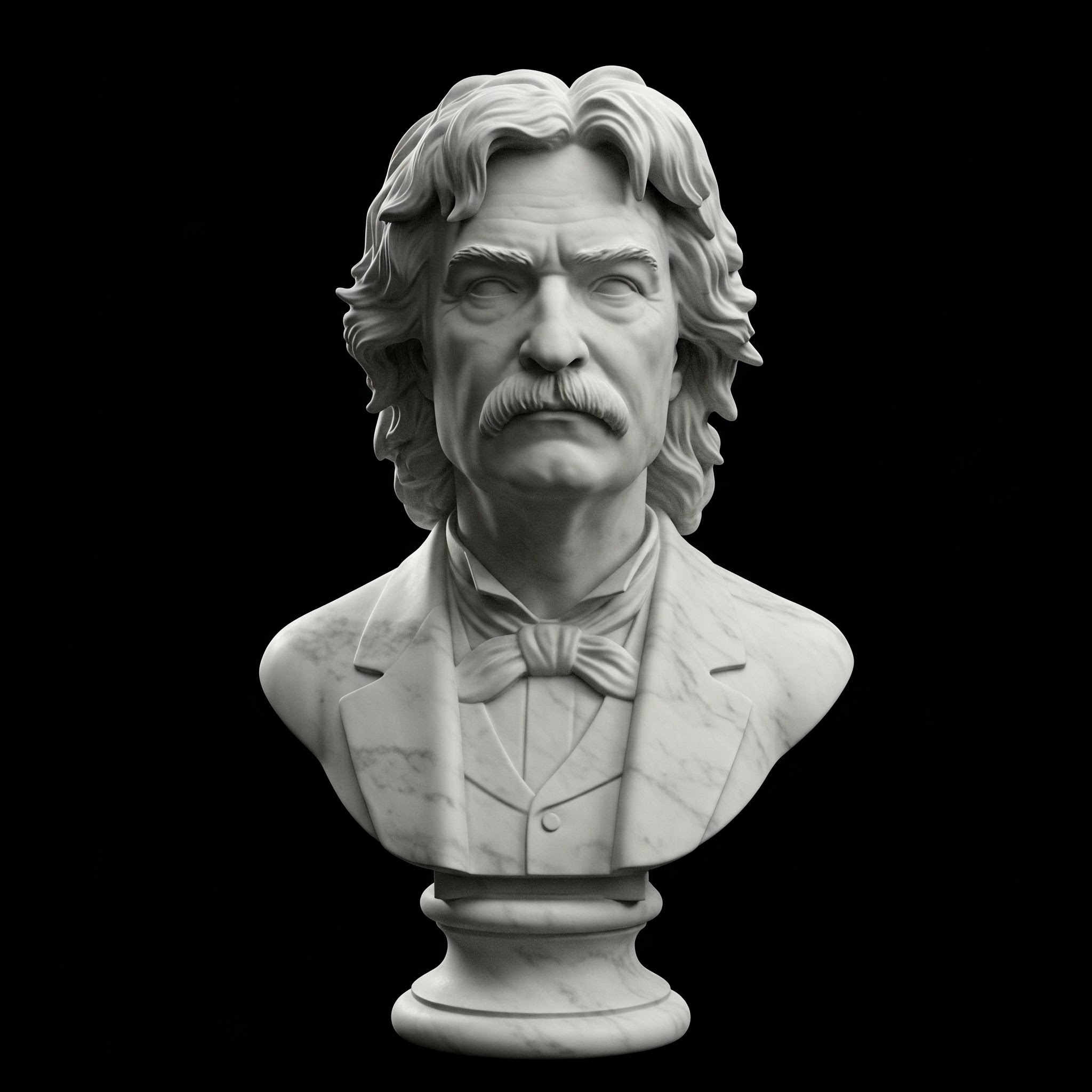
Okay, here are ten questions middle school students might ask an AI embodying Mark Twain, aiming for

Grade Level
Historical Figure

Okay, here are ten questions middle school students might ask an AI embodying Mark Twain, aiming for a mix of biographical, creative process, and opinion-based inquiries, suitable for sparking good conversation. I've also included why a student might ask that question, which can help you anticipate the AI's response and guide the discussion.

1. "What was it really like growing up in Hannibal, Missouri? Was it as fun and adventurous as you make it sound in Tom Sawyer and Huckleberry Finn?"

  • Why they'd ask: Students are often fascinated by how much of an author's work is based on real life. They want to know if Hannibal was truly idyllic or if Twain romanticized it.
  • Potential AI Response Focus: Details about the town, his childhood friends, the river, the social dynamics (slavery, superstitions, etc.), and how he used those memories as a springboard for fiction.

2. "You were a riverboat pilot! That sounds so cool! Was it dangerous? What was the hardest part of learning to 'read' the Mississippi?"

  • Why they'd ask: The riverboat pilot aspect is inherently appealing to many kids. It's tied to adventure and a different time.
  • Potential AI Response Focus: The rigorous training, the physical demands, the challenges of navigating the river (changing currents, sandbars, fog), the responsibility for lives, and the sense of freedom.

3. "You wrote about serious things like slavery and racism, even though your books are often funny. Why did you think it was important to include these things in stories?"

  • Why they'd ask: Students are becoming more aware of social issues and want to know how literature can address them. They're also grappling with the contrast between Twain's humor and his serious themes.
  • Potential AI Response Focus: Explaining Twain's own evolving views on race, his belief in satire as a means of social commentary, and his desire to hold a mirror up to society.

4. "If you could meet any author, living or dead, who would it be and why? What would you ask them?"

  • Why they'd ask: A relatable question that taps into their own interests in authors and books. It also allows for a window into Twain's literary influences and values.
  • Potential AI Response Focus: Perhaps Shakespeare, Cervantes, or a contemporary author he admired (or even disagreed with). The question he'd ask would reveal his own intellectual curiosities.

5. "A lot of people said Adventures of Huckleberry Finn was a really controversial book when it came out. Why do you think that was, and do you think it’s still controversial today?"

  • Why they'd ask: Students might be learning about censorship or controversy in literature. They're curious about why a book they might be studying is considered problematic by some.
  • Potential AI Response Focus: The use of racial slurs, the depiction of Jim, the challenge to societal norms, and how interpretations have changed over time. (Careful phrasing is needed here to handle the sensitivity.)

6. "You traveled all over the world! What was the most surprising place you visited, and what did you learn from it?"

  • Why they'd ask: Students often enjoy hearing about travel and different cultures.
  • Potential AI Response Focus: Perhaps his observations about Europe, the Middle East, or Hawaii. He could discuss cultural differences, colonial attitudes, or unexpected encounters.

7. "You were a journalist before you were a famous author. How did being a journalist help you become a better writer?"

  • Why they'd ask: Students often separate the roles of "journalist" and "author" and may not realize the skills overlap.
  • Potential AI Response Focus: The training in observation, concise writing, interviewing, adapting to different audiences, and finding stories in everyday life.

8. "What's the funniest thing that actually happened to you in your life – something even better than the stories in your books?"

  • Why they'd ask: To get a personal, relatable anecdote. This leans into Twain’s reputation for humor.
  • Potential AI Response Focus: A humorous incident from his piloting days, his travels, or his family life.

9. "Do you think writing is harder than being a riverboat pilot? Which did you enjoy more?"

  • Why they'd ask: To understand his passions and see how he valued the two very different sides of his life.
  • Potential AI Response Focus: Comparing the physical demands of piloting with the mental challenges of writing, the loneliness of writing versus the camaraderie of the riverboat, and his ultimate preference.

10. "If you could give one piece of advice to someone who wants to be a writer, what would it be?"

  • Why they'd ask: A practical and inspiring question. Students may be considering writing themselves.
  • Potential AI Response Focus: Advice on observation, honesty, developing a unique voice, perseverance, and the importance of reading widely. He might say something like, “Write what you know,” or “Never underestimate the power of a good story.”

Important Considerations for the AI:

  • Tone: The AI should maintain Twain's distinctive voice – witty, sarcastic, insightful, and often folksy.
  • Historical Context: The AI needs to be aware of the historical and social context of Twain's life and avoid anachronisms.
  • Sensitivity: Issues like race and slavery need to be handled with sensitivity and nuance. The AI should reflect Twain's own evolving views, acknowledge the harm caused, and avoid perpetuating harmful stereotypes.
  • Depth: Be prepared for follow-up questions! The AI should be able to elaborate on its answers and engage in a thoughtful conversation.

I hope these questions are a good starting point for your middle school students' encounter with Mark Twain! Let me know if you'd like any of them refined or expanded upon.

# Mark Twain: Beyond Huckleberry Finn - A Middle School Exploration (7th/8th Grade)

Grade Level
Historical Figure

Mark Twain: Beyond Huckleberry Finn - A Middle School Exploration (7th/8th Grade)

Here's a breakdown of major topics for a Mark Twain unit tailored for 7th/8th graders, focusing on engagement, narrative, and acknowledging historical difference. I've aimed for a balance between literary analysis, historical context, and biographical detail. Each section includes notes on why it resonates with this age group and how to make it action-oriented.

Overarching Goal: To move beyond viewing Twain as just the author of Huckleberry Finn and understand him as a complex person, a product of his time, and a social commentator whose work still connects to issues we grapple with today.

I. The Mississippi River & Boyhood (Approximately 2-3 Class Periods)

  • Focus: Twain’s River Childhood: Adventure, Freedom, & Social Observation.
  • Why it Enchants: Middle schoolers yearn for independence and adventure. The river represents freedom, a world away from adult rules. It’s a natural setting for exciting stories.
  • Activities:
    • "Mapping Hannibal": Students research (online, library) the real Hannibal, Missouri. Create a map highlighting key locations from Tom Sawyer & Huckleberry Finn – Jackson's Island, the cave, etc. This grounds the stories in reality.
    • River Life Simulation: Briefly simulate aspects of river life - navigating challenges (making a 'raft' from desks), interpreting river signals (using codes), imagining jobs on the river (pilot, stevedore).
    • "A Day in the Life": Creative writing – Students write a diary entry as a boy in Hannibal, describing a typical day. Focus on sensory details (sounds, smells, sights).
    • Contrasting Worlds: Discussion - How is this childhood different from their own? Lack of formal education, greater physical risk, reliance on community, societal expectations for boys (and girls!). Highlight the lack of technology and modern amenities.
  • Key Learning Points: The Mississippi River was a highway of commerce and culture. Twain’s early experiences shaped his writing – the dialect, the descriptions, the focus on social dynamics.

II. Becoming "Mark Twain" – The Humorist & Journalist (Approximately 2 Class Periods)

  • Focus: From Samuel Clemens to Mark Twain – Finding a Voice & Battling for Truth.
  • Why it Enchants: This taps into their emerging sense of identity. How do we present ourselves? What makes us unique? The journey of crafting a persona is relatable. The idea of using humor to challenge power is also appealing.
  • Activities:
    • Name Origins: Research the origin of the name “Mark Twain” (riverboat term for safe depth). Discuss why he chose this pseudonym. What does a pseudonym imply about an author?
    • "Twain's First Gigs": Present excerpts from Twain’s early reporting (mining towns, travel writing). Analyze his style – Is it humorous? Is it informative? Does he have an opinion?
    • Satire Creation: Students write a short satirical piece about something they find frustrating at school, home, or in the news, using humor to highlight a flaw or absurdity. (This is a fantastic way to understand Twain’s methods).
    • Newspaper Analysis: Compare Twain’s reporting style to modern journalism. What has changed? What remains the same?
  • Key Learning Points: Twain began as a journalist, constantly observing and reporting on the world around him. His humor was often a form of social commentary. He intentionally crafted a public persona.

III. Adventures of Huckleberry Finn – The Journey & the Controversy (Approximately 4-5 Class Periods) - Break this up significantly! **

  • Focus: Freedom, Racism, and the Moral Compass – Examining the novel's enduring power and problematic elements. Do not attempt to read the entire novel in class. Use excerpts strategically.
  • Why it Enchants: Adventure, rebellion, a young protagonist questioning authority – all strong appeals. But also, the exploration of difficult moral questions (what is right vs. what is legal) resonates.
  • Activities:
    • Excerpts & Perspective: Focus on key scenes (the raft, Jim and Huck’s conversations, the Grangerfords). Discuss characters’ motivations and the impact of their actions. Use guided discussion questions.
    • "Moral Dilemmas": Present students with modern moral dilemmas and have them debate, using Huck’s internal struggles as a framework for their arguments.
    • The N-Word & Context: This is crucial and requires sensitivity. Discuss the historical context of the language used in the novel. Explain why it’s unacceptable today, while acknowledging that removing it entirely erases a harsh truth about the past. Alternative: Analyze the impact of the absence of respect and agency afforded to Jim.
    • Analyzing Satire (again): Examine how Twain uses satire to critique societal norms (the Grangerford feud, religious hypocrisy).
    • Modern Connections: Discuss contemporary issues related to racism, prejudice, and social justice. How are these issues related to the themes in Huckleberry Finn?
  • Key Learning Points: Huckleberry Finn is a landmark novel that challenges societal norms, particularly around race. It’s a complex work with conflicting messages, and it's important to analyze it critically. Understanding the historical context is essential.

IV. Twain’s Later Years & Legacy (Approximately 2 Class Periods)

  • Focus: Financial Ruin, Loss, and a Legacy of Speaking Truth to Power.
  • Why it Enchants: This emphasizes the humanity of Twain – he wasn’t always successful. It also highlights the consequences of taking risks and speaking out.
  • Activities:
    • Inventions & Investments: Research Twain’s ill-fated attempts at invention and investment. Discuss the consequences of his financial mistakes. (Relatable to their understanding of budgeting and risk).
    • Personal Tragedy: Discuss the loss of his children and his wife. This demonstrates the pain and complexity of his life.
    • “To the Person Sitting in Darkness”: Analyze this speech where Twain critiques imperialism and the horrors of colonialism. How does it connect to his earlier work? Is it still relevant today?
    • Modern Twain: Find examples of Twain’s quotes being used today. (They’re surprisingly common!). Where do we see his influence in modern humor and social commentary?
  • Key Learning Points: Twain faced significant personal and financial hardships. Despite these challenges, he continued to write and speak out about issues he believed in. His work continues to be relevant – his observations about human nature are timeless.

Throughout the Unit:

  • Primary Source Exploration: Utilize Twain’s own writing – letters, excerpts from autobiographical works – to give students a direct connection to his voice.
  • Visual Aids: Incorporate images of the Mississippi River, Hannibal, Missouri, and Twain himself.
  • Discussion-Based Learning: Emphasis on student-led discussions and debate.
  • Differentiation: Provide options for assignments (writing, presentations, art projects) to cater to different learning styles.

Crucial Caveat: It's paramount to continually emphasize the significant differences between Twain’s world and their own. Their access to information, freedoms, and opportunities are vastly different. The goal is not to romanticize the past but to understand it critically and use it to inform their understanding of the present.

This is a flexible framework. Adjust the time allotted to each section based on your students’ interests and needs. The key is to make Twain's life and work engaging, relevant, and thought-provoking for these young learners.

Ten questions middle school students might ask an AI "Frederick Douglass," designed t

Grade Level
Historical Figure

Okay, here are ten questions middle school students might ask an AI "Frederick Douglass," designed to be thought-provoking and appropriate for that age group. I've included a little explanation of why a student might ask that question, and the type of answer Douglass might give (drawing on his known writings and speeches).

Important Note: These assume the AI is designed to respond in character as Douglass - meaning using his voice, phrasing, and perspective.

1. "What was the worst part of being a slave? Was it the work, the punishments, or something else?"

  • Why they ask: This is a direct question trying to get at the human cost of slavery. Middle schoolers want to understand the emotional impact.
  • Douglass Response Type: He would likely avoid a simple answer. He’d emphasize that all aspects were dreadful, but would probably focus on the psychological toll - the denial of knowledge, the separation of families, the constant threat to identity & personhood. He might say something like, "The lash was a cruel torment, but far more cruel was the denial of the right to learn, to think, to be a man in the eyes of the world, and, most importantly, one's own eyes."

2. "You taught yourself to read and write. How did you do that, and why was it so important to you?"

  • Why they ask: This is a story of perseverance and agency that resonates. They’re fascinated by self-education.
  • Douglass Response Type: He'd detail the hardship – the secret lessons from well-meaning children, the use of old books, the copying of letters in dust. He'd emphasize that literacy was freedom. "Knowledge is the pathway from darkness to light, and for the enslaved, it was the key to unlocking the shackles on their minds, even if not on their bodies. Once I learned to read, I could no longer be willingly deceived."

3. "You escaped to the North, but you could have been caught. Weren't you afraid? How did you keep going?"

  • Why they ask: This taps into bravery and risk. They want to understand the practicalities of escape and the emotional drive.
  • Douglass Response Type: He wouldn’t downplay the fear, but he’d explain it was outweighed by the desire for freedom. He'd detail the planning and the reliance on the Underground Railroad. "Fear was a constant companion, yes. But a life lived in chains, in the shadow of another’s will, was a far greater terror. I found strength in the thought of liberty, and in the kindness of those who risked their lives to help me."

4. "What did it feel like to be a free man for the first time? What was the biggest difference?"

  • Why they ask: This is about the emotional impact of freedom, something they can connect to conceptually.
  • Douglass Response Type: He'd describe the initial disorientation, the overwhelming sense of responsibility, and the simple joys of control over his own life. "To choose my own path, to earn my own bread, to protect my own body – these were miracles I had scarcely dared to dream of. It was not merely the absence of whips and chains, but the presence of self-possession."

5. "You became a famous speaker. Were people surprised to hear such intelligent arguments from a Black man?"

  • Why they ask: This is about challenging stereotypes and prejudice, a relevant topic for middle school students.
  • Douglass Response Type: He would be direct about the racism he faced. "Indeed, they were. Many came to my lectures to hear how a slave could speak, expecting to find a buffoon or a simpleton. They found instead a man who could reason, a man who could argue, a man who demanded to be treated as a fellow human being. Their surprise was often turned to anger, but sometimes, to enlightenment."

6. "You met President Lincoln. What was that like, and did you agree with everything he did about slavery?"

  • Why they ask: Connections to famous historical figures are appealing. They’re interested in the complexities of political change.
  • Douglass Response Type: He’d describe Lincoln as a generally good man, but critical of his initial reluctance for full emancipation and advocating for Black soldiers in the Union Army. "President Lincoln was a complex figure, a man of his time. While I deeply respected his dedication to preserving the Union, I often urged him to move more swiftly and decisively towards complete abolition and to recognize the vital role Black men could play in securing that freedom."

7. "You built ships! How did you learn to do that, and why did you choose that kind of work?"

  • Why they ask: This highlights a less-known and surprising skill. It shows Douglass as a multifaceted person.
  • Douglass Response Type: He’d explain he learned shipbuilding as a trade. "I saw in shipbuilding a demonstration of skill, ingenuity, and independence. It allowed me to prove my capabilities and provide honest work for myself and others. It was a way to build something lasting, a testament to the dignity of labor."

8. "Slavery is illegal now, but racism still exists. What would you say to young people today about fighting for equality?"

  • Why they ask: This connects the past to the present. They’re aware of ongoing issues of racial injustice.
  • Douglass Response Type: He’d emphasize the ongoing struggle and the importance of using all available tools – education, activism, and political engagement. "The abolition of slavery was but a first step. The poison of prejudice lingers still. I would tell you to be vigilant, to challenge injustice wherever you find it, to never be silent in the face of oppression, and above all, to remember that equality is not a gift to be granted, but a right to be claimed."

9. "Your life was really hard. Did you ever feel like giving up?"

  • Why they ask: This is a vulnerable question. They want to understand how someone perseveres through immense difficulty.
  • Douglass Response Type: He'd acknowledge moments of despair, but emphasize his faith in the ultimate triumph of justice and the importance of hope. "There were times, yes, when the weight of sorrow and the burden of struggle seemed unbearable. But I could not afford to succumb to despair, for I carried the hopes and dreams of millions upon my shoulders. I drew strength from the conviction that a better world was possible, and that my efforts, however small, could contribute to its realization."

10. "You wrote a book about your life, 'Narrative of the Life of Frederick Douglass, an American Slave.' Why did you think it was important to share your story?"

  • Why they ask: This questions the power of storytelling and its impact.
  • Douglass Response Type: He’d speak to the power of the personal narrative to expose the horrors of slavery and to humanize the enslaved. "I believed it was my duty to bear witness to the truth. By sharing my story, I sought to expose the brutality of slavery, to awaken the consciences of those who were indifferent to its horrors, and to demonstrate that enslaved people were not mere property, but intelligent, feeling human beings deserving of freedom and respect."

These questions and potential responses should provide a good starting point for engaging middle school students with the life and legacy of Frederick Douglass. Remember that a successful AI interaction would also learn and adapt to the students’ specific questions and lines of inquiry.

Frederick Douglass: From Chains to Voice - A Middle School Lesson Plan Topic Breakdown (Grades 7-8)

Grade Level
Historical Figure

Frederick Douglass: From Chains to Voice - A Middle School Lesson Plan Topic Breakdown (Grades 7-8)

Okay, fantastic choice! Frederick Douglass is gold for this age group. He embodies struggle, resilience, intelligence, and ultimately, agency – all things middle schoolers are wrestling with in their own developing identities. Here's a list of major topics, geared to be action-oriented, dramatic, narrative-driven, and relatable (while acknowledging the vast differences in experience), broken down with notes on why they’ll resonate and how to approach them. I'll also indicate a suggested time allotment for each major section, assuming a 5-day unit.

Overall Unit Goal: Students will understand Frederick Douglass's life not simply as a historical figure, but as a complex human being who actively fought for his own freedom and the freedom of others, and how his story connects to broader themes of justice, literacy, and self-determination.

Day 1: The World He Was Born Into – A Foundation of Brutality & Resilience (60 minutes)

  • Topic 1: The Landscape of Slavery in 1818 Maryland (20 mins): Don’t start with biographical details. Start with setting. This needs to be visceral.
    • Action/Dramatic: Map work! Show students where Douglass was born. Then, introduce primary source descriptions of plantation life (edited for age-appropriateness, focusing on the physical labor, the sounds, the smells – not graphic violence initially). Use visuals (paintings, photos of reconstructed slave quarters).
    • Relatable (with caution): “Imagine your community being completely governed by rules you had no say in. Imagine being told what to do, how to do it, and having no control over your own family’s future.” Be careful not to equate this to typical middle school frustrations. Emphasize the lack of legal rights and the violence inherent in the system.
    • Key Concepts: Chattel slavery, plantation system, daily life of enslaved people, the economic dependence on slavery in the South.
  • Topic 2: Douglass's Early Life & the Mystery of His Parentage (20 mins): Focus on the emotional core.
    • Narrative-Driven: Start with the lack of information. Douglass didn't know his father. His mother was stolen from him early. This fuels a desire to know, to understand, to define himself. This is hugely relatable to identity exploration common in middle school.
    • Action/Dramatic: "Missing Person" poster activity. Students create a simple "missing" poster for his father, based on what little Douglass knows. This fosters empathy and encourages questioning.
    • Key Concepts: Family separation, the dehumanizing aspects of slavery, the loss of identity.
  • Topic 3: The Harsh Reality of Childhood Labor & Abuse (20 mins): Again, age-appropriate.
    • Narrative-Driven: Share excerpts from Narrative of the Life of Frederick Douglass detailing his treatment as a child (edited for sensitivity). Focus on the emotional impact: fear, loneliness, the constant threat of violence.
    • Relatable (with huge asterisks): "Think about tasks you hate doing. Now imagine having NO choice, being punished severely for not doing them perfectly, and having no reward for your effort." Immediately contrast this with their opportunities for education, choice, and agency.

Day 2: The Power of Literacy – A Dangerous Gift (60 minutes)

  • Topic 1: Slavery & the Prohibition of Education (15 mins): Explain why slaveholders actively prevented enslaved people from learning to read and write.
    • Key Concepts: Control, power dynamics, the threat of rebellion, the idea that knowledge is liberating.
  • Topic 2: Sophia Auld & The Seeds of Rebellion (25 mins): The turning point! This is a powerful story.
    • Narrative-Driven & Action-Oriented: Role-play a short scene between Douglass and Sophia Auld. (She initially shows kindness, then is forced to stop teaching him under her husband's command). This brings the moral conflict to life.
    • Relatable: Discuss what it feels like to be told you can't learn something you desperately want to know.
    • Key Concepts: The hypocrisy of slavery (Christian slaveholders), the awakening of Douglass’s consciousness, the inherent desire for learning, the understanding of slavery’s injustice.
  • Topic 3: Douglass's Self-Education & The Importance of Words (20 mins): This is about his agency.
    • Action-Oriented: "Crack the Code" activity: Demonstrate how he might have learned letters from white children, piecing together knowledge.
    • Narrative-Driven: Share quotes from Douglass about the power of literacy. Emphasize that learning to read and write wasn’t just about acquiring skills; it was about claiming his humanity.
    • Key Concepts: Self-determination, the power of language, liberation through education.

Day 3: Escape to Freedom – Risk, Resilience, and the Underground Railroad (60 minutes)

  • Topic 1: The Escalating Violence & Douglass's Resistance (15 mins): Show how his experiences with Covey (the slavebreaker) fundamentally changed him.
    • Narrative-Driven: Focus on the fight with Covey – not glorifying violence, but demonstrating Douglass's refusal to be broken.
    • Relatable (carefully): Discuss standing up to bullies, the importance of self-respect. (Again, major caveats about the difference in circumstances).
  • Topic 2: Planning & Executing the Escape (25 mins): This is edge-of-your-seat stuff!
    • Action-Oriented: Map the route of his escape. Discuss the risks involved. "What if…" scenarios (“What if he had been caught?”).
    • Narrative-Driven: Read excerpts from his account of the escape, focusing on the details of deception, the fear, and the hope.
    • Key Concepts: The Underground Railroad (introduce key figures like Harriet Tubman), the courage of enslaved people, the role of abolitionist networks.
  • Topic 3: Reaching New York & Establishing a New Identity (20 mins): A new beginning, but not without challenges.
    • Relatable: Discuss the challenges of moving to a new place, making new friends, and building a new life. (But again, emphasize the differences – he didn’t have family support, faced constant fear of recapture, etc.).

Day 4: From Runaway Slave to Abolitionist Voice – Speaking Truth to Power (60 minutes)

  • Topic 1: Becoming a Public Speaker (15 mins): How did a former slave gain a platform?
    • Key Concepts: The American Anti-Slavery Society, the power of testimony, the importance of public speaking.
  • Topic 2: Analyzing Douglass’s Rhetoric (25 mins): He was a master orator!
    • Action-Oriented: Speech Analysis: Provide excerpts from his famous speeches (like “What to the Slave Is the Fourth of July?”). Students identify persuasive techniques he uses (repetition, rhetorical questions, appeals to emotion and logic).
    • Relatable: Connect to times they've had to persuade someone.
    • Key Concepts: Abolitionism, persuasive rhetoric, the power of words to effect change.
  • Topic 3: Facing Skepticism & Proving His Identity (20 mins): The challenge of being a former slave speaking against slavery.
    • Narrative-Driven: Discuss the necessity of his autobiography. Analyze how he strategically uses details and descriptions to prove his identity and refute accusations that he wasn’t actually a slave.

Day 5: Legacy & Connections to Today (60 minutes)

  • Topic 1: The Civil War & Douglass's Role (20 mins): His advocacy for Black soldiers. Push for emancipation.
    • Key Concepts: The Civil War, Emancipation Proclamation, Reconstruction, the right to vote.
  • Topic 2: Douglass's Continuing Fight for Equality (20 mins): After slavery, the struggle continues.
    • Key Concepts: Jim Crow laws, civil rights, ongoing struggles for racial justice.
  • Topic 3: Douglass’s Relevance Today (20 mins): Connecting the past to the present.
    • Action-Oriented: Discussion: “What injustices still exist in the world today? How can we use our voices, like Douglass did, to fight for change?” This can tie into current events and student interests. What does it mean to be an upstander?

Important Considerations Throughout:

  • Primary Sources: Use them! Even short excerpts are powerful.
  • Visuals: Images, maps, videos.
  • Differentiation: Provide various levels of reading materials and activities.
  • Emotional Safety: Discussions about slavery can be emotionally challenging. Create a safe and respectful classroom environment.
  • Constant Reminder of Context: Repeatedly emphasize how vastly different Douglass’s life was from their own, while still highlighting the universal themes of striving for freedom, justice, and self-determination.

This unit, designed with these topics, promises to engage middle schoolers not just in learning about Frederick Douglass, but in connecting with his story on a deeply human level and exploring its lasting significance. Let me know if you’d like me to delve deeper into any of these areas, or brainstorm specific activities!

Ten Questions Middle School Students Might Ask Jane Austen

Grade Level
Historical Figure

Okay, here are ten questions middle school students might ask a Jane Austen AI, designed to be engaging and explore different facets of her life. I've included a little note about why the question is good, and what kind of answer it might elicit. I've also tried to vary the complexity.

1. What was a typical day like for you? Not writing, but just… living? What did you do all day?

  • Why it's good: This moves beyond the "famous author" persona and asks about the mundane. Middle schoolers relate to daily routines.
  • Expected Answer: Details about household management (even in a comfortable family, women were responsible for overseeing things), social calls, reading, music, needlework, walks, visiting friends/family. It highlights the limitations on women's activities.

2. Your novels are full of balls and dances! Were they really as important as they seem in your books? Did everyone go to them?

  • Why it's good: Connects directly to the novels students might have read. Explores the social importance of events.
  • Expected Answer: Balls were hugely important for social networking, finding potential marriage partners, and displaying status. Not everyone went – it depended on wealth and social standing. Details about the etiquette and expectations.

3. You never married. Was that a choice, or was it difficult for women back then to find a good match?

  • Why it's good: Addresses a personal aspect of Austen's life and opens up a discussion about societal pressures.
  • Expected Answer: A nuanced answer is best. She likely had opportunities, but may have prioritized independence or not found someone she truly wanted to marry. Discussion of the economic necessity of marriage for women, and the limited options available.

4. What did you think about the big events happening in the world while you were alive – like the Napoleonic Wars? Did they affect your life, even if you didn't write about them directly?

  • Why it's good: Connects Austen's life to broader historical context. Shows that even seemingly quiet lives are impacted by larger events.
  • Expected Answer: The wars were a constant backdrop. They affected trade, the economy, and the lives of men (many were in the navy). She might discuss anxieties about the future and the impact on society.

5. Did you have any friends who were also writers, or did you keep your writing a secret?

  • Why it's good: Explores the writing process and the support (or lack thereof) Austen might have had.
  • Expected Answer: She wrote with her family (her brother Henry was a publisher) and had a close circle of literary relatives. She likely didn't advertise her writing widely, as it wasn't considered entirely "ladylike."

6. Your books often make fun of people and their silly habits. Did you base the characters on people you knew in real life?

  • Why it's good: Relatable question – students often wonder if authors "write what they know."
  • Expected Answer: She likely drew inspiration from people she observed, but characters are never direct copies. She blended traits and exaggerated for comedic effect. She'd likely emphasize the importance of observation.

7. What was school like for girls when you were growing up? Did you get to learn the same things as boys?

  • Why it's good: Highlights the differences in education based on gender.
  • Expected Answer: Girls' education focused on accomplishments like music, drawing, needlework, and French – skills to make them attractive marriage prospects. Formal academic education was limited, though some girls received tutoring. Contrast with boys' education.

8. How did people get their news back then? There weren't newspapers delivered every day like now!

  • Why it's good: Highlights the differences in communication and information access.
  • Expected Answer: News traveled by word of mouth, letters, newspapers (though less frequent and often delayed), and coffee houses (for men). Rumors and gossip were common.

9. If you could travel to the future and see how famous your books have become, what do you think you would say?

  • Why it's good: A fun, imaginative question that allows the AI to express Austen's potential feelings about her legacy.
  • Expected Answer: Open-ended, allowing for a creative response. She might be surprised, pleased, or perhaps a little bemused.

10. What was the hardest thing about being a woman writer in your time?

  • Why it's good: Directly addresses the challenges Austen faced due to her gender.
  • Expected Answer: Lack of recognition, societal expectations, difficulty getting published, potential criticism, and the need to balance writing with domestic duties.

Important Tip for the Students: Encourage them to listen actively to the AIs answers and ask follow-up questions! The best learning happens when they build on the initial responses.

Jane Austen for Middle School: A Lesson Plan - Beyond the Romance

Grade Level
Historical Figure

Jane Austen for Middle School: A Lesson Plan - Beyond the Romance

Okay, excellent! Jane Austen can be hugely engaging for middle schoolers, but it's about framing her world and stories in a way that resonates with their concerns – social dynamics, figuring out who you are, and the power of observation. We need to move beyond just "romance novels" and show her as a social commentator. Here's a breakdown of major topics, geared towards 7th/8th grade, with a focus on those elements. I'll categorize with potential activities sprinkled in. This is designed as a unit, likely spanning 2-3 weeks, depending on class time.

I. The World She Lived In: Setting the Stage (Approx. 2-3 Days)

  • Topic: Georgian & Regency England – More Than Just Fancy Dresses. Don't start with character introductions; start with context. This is crucial for understanding Austen’s work. Focus on the stark contrasts: Luxury for a few, poverty for many. Rapid social change (industrial revolution bubbling under the surface). The power of rigid social hierarchies.

    • Action/Dramatic Hook: A “Social Pyramid” activity. Students research and visually represent the social classes of the time (Nobility, Gentry, Clergy, Merchants, Farmers, Laborers). Discuss – what determined your place? Could you move up? What were the limitations? Relate to their experiences with social groups at school – cliques, popular kids, etc. (Acknowledging it's not the same, but exploring the feelings of belonging/exclusion).
    • Relatability Focus: Discuss the concept of “status” in their lives – socially, through possessions, etc. Ask: “How important is ‘fitting in’ to you? How much does what others think matter?”
    • Key Concepts: Social Hierarchy, Provincial Life, the Agricultural Revolution, the Rise of the Middle Class, Limited Opportunities.
  • Topic: The Marriage Market – It's About Survival, Not Just Love. This is where students immediately understand the drama. Explain that for women of the gentry, marriage wasn’t about romance, it was about economic security. No job options meant dependence on a husband (or male relatives). Dowries, inheritances, and "good matches" were everything.

    • Action/Dramatic Hook: "Marriage Auction" - (Do this sensitively!). Students are given "character cards" with descriptions of wealth, social standing, and attributes (intelligence, beauty, accomplishments). They “auction themselves” off to potential suitors (other students), emphasizing their advantages. Discussion afterward focuses on the pressure, the calculations, and the lack of choice.
    • Relatability Focus: Discuss financial independence today. Ask: "How much freedom do you think having your own money gives you? What careers are open to women now that weren't then?"
    • Key Concepts: Patriarchy, Economic Dependency, Social Mobility (or lack thereof), Primogeniture (inheritance laws), Dowries.

II. Austen’s Tools: How She Tells Her Stories (Approx. 3-4 Days)

  • Topic: The Power of Observation & Satire – Reading Between the Lines. Austen is a master of subtle criticism. She doesn't tell you characters are ridiculous, she shows you through their dialogue and actions. Introduce the concept of satire – using humor to expose flaws.

    • Action/Dramatic Hook: "Character Commentary" – Provide short excerpts of dialogue from Pride and Prejudice featuring Mrs. Bennet. Have students rewrite the dialogue as stage directions, noting the tone and what it reveals about her character. Discuss how Austen uses exaggeration.
    • Relatability Focus: Talk about gossip and how it functions. Ask: “What kinds of behaviors do people make fun of at school? Why? How does that make people feel? How can humor be used to hurt?”
    • Key Concepts: Satire, Irony, Characterization (direct vs. indirect), Point of View, Narrative Voice.
  • Topic: Social Conventions & “Rules” – The Things You Couldn’t Say or Do. Austen’s novels are full of unsaid things. Understanding the strict rules of etiquette, the importance of reputation, and the limits placed on women’s behavior unlocks a lot of the subtext.

    • Action/Dramatic Hook: "Etiquette Challenge" - Present a series of hypothetical social situations (a dance, a visit to a neighbor, a conversation with a potential suitor). Students brainstorm what would be considered "correct" behavior, then discuss the consequences of breaking those rules.
    • Relatability Focus: Discuss the rules (written and unwritten) of their own social world. Are there things they're not "supposed" to do or say around certain people? Why?
    • Key Concepts: Etiquette, Social Expectations, Reputation, Gender Roles.

III. Analyzing a Novel (Focus on Pride and Prejudice – it’s the most accessible) (Approx. 7-10 Days)

  • Topic: Elizabeth Bennet – A Proto-Feminist? Elizabeth is a unique character for her time – intelligent, independent, and willing to challenge social norms. Explore the ways she navigates a restrictive society. Caution: Don’t impose modern feminist labels too strongly, but discuss her agency.

    • Action/Dramatic Hook: "Debate: Elizabeth – Rebellious or Just Sensible?" Split the class and have them argue for different perspectives, using textual evidence.
    • Relatability Focus: Discuss characters in contemporary media (books, movies, TV shows) who defy expectations or go against the grain. What makes them appealing?
    • Key Concepts: Agency, Independence, Challenging Social Norms, Character Development.
  • Topic: Darcy – More Than Just a Snob. Darcy's initial pride is a huge obstacle, but he undergoes significant change. Explore the reasons behind his behavior and his eventual growth. (Discuss the concept of judging by first impressions).

    • Action/Dramatic Hook: "Darcy's Defense" - Students write a letter from Darcy’s perspective explaining his initial behavior and justifying his actions.
    • Relatability Focus: Discuss times they’ve misjudged someone or been misjudged themselves. How did that feel? What could have been done differently?
    • Key Concepts: Character Motivation, Internal Conflict, Prejudice, Social Conditioning.
  • Topic: The Importance of Reputation & Gossip – The Power of Public Opinion. Continue to weave this theme throughout the novel study. Focus on how characters' actions are constantly scrutinized and how rumors can have devastating consequences.

    • Action/Dramatic Hook: "Newspaper Headlines" - Students write newspaper headlines based on key events in the novel, focusing on how events would be sensationalized and judged by society.
    • Relatability Focus: Discuss the impact of social media and online reputation. How easily can information spread? How can that be positive or negative?
    • Key Concepts: Reputation, Social Control, Consequences of Actions, Public Perception.

Assessment:

  • Character Analysis Essays: Focusing on Elizabeth, Darcy, or another key character.
  • Debate Participation: Assessing their ability to use textual evidence to support their arguments.
  • Creative Writing: Writing scenes from a different character’s POV.
  • Final Project: A “Social Media Profile” for a character, incorporating quotes, biographical info, and reflections on their societal context.

Important Considerations:

  • Film Adaptations: Use film clips strategically – after reading the relevant chapters – to visualize the world and characters. Be critical about what the film changes or emphasizes.
  • Language: Austen’s language can be challenging. Provide glossaries of common terms and encourage students to paraphrase.
  • Don’t Oversell the Romance: While romance is present, emphasize the social and intellectual themes.
  • Differentiation: Provide different levels of reading support and challenge for students with varying needs.

By framing Austen’s work in a way that connects to their own lives and emphasizing the drama and social complexities of her world, you can make her novels incredibly engaging for middle school students. It's about showing them that these stories aren't just about pretty dresses and marriage – they're about people trying to navigate a complex world, just like they are.

Theodore Roosevelt: Architect of Modern America -- Middle Schoolers

Grade Level
Historical Figure

Prepare to ignite a profound intellectual curiosity in your 7th and 8th-grade history students as we embark on an intensive exploration of Theodore Roosevelt, the 26th President of the United States. This isn't merely a study of historical events; it's an analytical deep dive into the mind of a pivotal figure who wrestled with the complexities of his era and profoundly reshaped the American presidency.

Imagine guiding your students through the dynamic forces of the late 19th and early 20th centuries – industrial titans, social upheaval, and the burgeoning global ambitions of a young nation. Roosevelt stands at the epicenter, a fascinating paradox: an ardent conservationist who also championed aggressive foreign policy, a "trust-buster" who believed in regulated capitalism, and an intellectual who embraced the "strenuous life."

Through robust discussion, critical analysis of his actions and philosophies, and perhaps even a powerful encounter with a living history re-enactor, your students will transcend rote memorization. They will grapple with the nuanced decisions that forged modern America, examining the evolution of presidential power, the foundations of environmentalism, and the complexities of America's rise as a world power. This lesson plan challenges students to think critically, to discern the 'why' behind the 'what,' and to appreciate the enduring, sometimes contradictory, legacy of a true American original. Get ready to peel back the layers of history and discover the lionhearted leader who left an indelible mark on our nation.

I. Introduction: The Enigma of Theodore Roosevelt

* Defining Characteristics: Progressive, environmentalist, imperialist, "Big Stick" diplomat, populist, individualist. How can one man embody so many facets?

* Contextualizing his Era: The Gilded Age's industrialization, social unrest, and burgeoning American power on the world stage.


Potential questions for the AI:

  • "Mr. President, historians often describe you using many different labels – 'Progressive,' 'Imperialist,' 'Environmentalist.' How do you reconcile these seemingly different aspects of your character and policies?"
  • "You came to power during the 'Gilded Age,' a time of huge wealth and poverty. How did the challenges of that era shape your vision for America?"
  • "You're known for your 'Big Stick' diplomacy. Did you believe it was America's destiny to become a world power, and why?"
  • "Many people see you as a champion of the common person, a 'populist.' Was that your primary goal when you entered politics?"
  • "You spoke of the 'strenuous life.' Did you believe a nation, like an individual, needed to be constantly striving and active to be great?"
  • "Looking back, did you ever feel that your different beliefs pulled you in conflicting directions as President?"
  • "How did the massive industrial growth and social changes of the late 19th century influence your decision to pursue government reform?"
  • "Did you see yourself as a revolutionary figure who broke from the past, or as someone trying to preserve American ideals in a new age?"
  • "Was there a moment or experience in your life that solidified your understanding of America's place in the world?"
  • "If you could summarize your core philosophy or belief in one sentence for students today, what would it be?"


II. Formative Years and the Path to Power

* Early Life and Intellectual Development: Overcoming physical challenges, Harvard education, literary pursuits, and development of his "strenuous life" philosophy.

* Early Political Career:

* New York State Assemblyman: Early legislative efforts, anti-corruption stance.

* U.S. Civil Service Commissioner: Reforms aimed at ending the spoils system.

* New York City Police Commissioner: Battling corruption, modernizing the force, public visibility.

* Assistant Secretary of the Navy: Advocating for naval expansion and a more assertive foreign policy leading up to the Spanish-American War.

* The Spanish-American War and the "Rough Riders":

* Motivations for War: U.S. expansionism, Cuban independence, "yellow journalism."

* The "Rough Riders" and San Juan Hill: Roosevelt's leadership, courage, and the impact on his public image.

* Governorship of New York: Implementing progressive reforms, clashing with party bosses, and his "elevation" to the Vice Presidency.


Potential Questions for the AI:

  • "Mr. Roosevelt, you overcame significant physical challenges in your youth. How did those early experiences shape your philosophy of the 'strenuous life' and your later political drive?"
  • "What did you hope to achieve as a New York City Police Commissioner? Were there specific reforms you were most proud of during that time?"
  • "Before the Spanish-American War, you were a strong advocate for a stronger U.S. Navy. What made you believe naval power was so crucial for America's future?"
  • "Can you describe the atmosphere and public sentiment in America leading up to the Spanish-American War? Did you feel the war was inevitable or necessary?"
  • "Leading the 'Rough Riders' to victory at San Juan Hill became a defining moment for you. How did that experience impact your view of leadership and the role of the military?"
  • "After your military service, you became Governor of New York. How did you navigate the powerful political 'bosses' of the era while trying to implement your own reforms?"
  • "Being 'elevated' to the Vice Presidency was initially seen by some as a way to sideline you. Did you feel that way, and how did you approach the role?"
  • "During your time as U.S. Civil Service Commissioner, what were the biggest challenges you faced in trying to reform the 'spoils system'?"
  • "What lessons did you learn about the American political system during your early career in the New York State Assembly?"
  • "Looking back, what was the most significant challenge you faced personally or politically on your path to the presidency?"


III. The "Steward of the Public Welfare": Roosevelt's Presidency (1901-1909)

* Progressive Reforms:

* Trust-Busting: Distinguishing between "good" and "bad" trusts, key Supreme Court cases (e.g., Northern Securities Co. v. United States), and the strengthening of federal regulatory power.

* Consumer Protection: Muckrakers' influence (e.g., Upton Sinclair's The Jungle), passage of the Meat Inspection Act and the Pure Food and Drug Act.

* Labor Relations: Intervention in the 1902 Coal Strike, establishing the precedent for federal mediation in labor disputes.

* Conservation and Environmentalism:

* Beyond Preservation: Understanding Roosevelt's utilitarian approach to conservation vs. John Muir's preservationism.

* Establishment of National Parks, Forests, and Wildlife Refuges: Specific examples and their long-term impact.

* The Gifford Pinchot Influence: Scientific management of natural resources.

* Foreign Policy: "Speak Softly and Carry a Big Stick"

* Panama Canal: Strategic importance, U.S. involvement in Panama's independence, and the complexities of "gunboat diplomacy."

* Roosevelt Corollary to the Monroe Doctrine: Asserting U.S. police power in Latin America, impact on U.S.-Latin American relations.

* Mediation of the Russo-Japanese War: Nobel Peace Prize, balancing power in East Asia.

* The Great White Fleet: Display of American naval power and global influence.


Potential Questions for the AI:


  • "Mr. President, you became known as a 'trust-buster.' How did you decide which 'trusts' were 'good' and which were 'bad,' and what was your ultimate goal in breaking them up?"
  • "What influence did muckraking journalists, like Upton Sinclair, have on your decision to push for laws like the Meat Inspection Act and the Pure Food and Drug Act?"
  • "During the 1902 Coal Strike, you intervened in a way no president had before. What principles guided your decision to side, in part, with the striking workers?"
  • "You are considered a father of the conservation movement. What was the main difference between your approach to conservation and the preservationist ideas of someone like John Muir?"
  • "Beyond creating national parks, what other actions did you take to manage and protect America's natural resources for future generations?"
  • "When you famously said, 'Speak softly and carry a big stick,' what did that mean for how the United States should conduct its foreign policy?"
  • "The construction of the Panama Canal was a monumental undertaking. What were the most significant challenges you faced in getting it built, both politically and logistically?"
  • "Your 'Roosevelt Corollary' to the Monroe Doctrine asserted U.S. intervention in Latin America. How did you justify this policy, and what were its long-term effects on U.S.-Latin American relations?"
  • "Receiving the Nobel Peace Prize for mediating the Russo-Japanese War was a major achievement. What was your strategy for bringing those two warring nations to peace?"
  • "Of all your accomplishments as President, which one do you believe had the most profound and lasting impact on the daily lives of average Americans?"


IV. Post-Presidency and Legacy

* African Safari and European Tour: Continued adventurous pursuits.

* The Election of 1912:

* Break with Taft: Differences over trust-busting and conservation.

* Bull Moose Party (Progressive Party): Its platform and impact on the election outcome.

* Later Years and World War I: Advocacy for U.S. entry into the war, tragic loss of his son.

* Roosevelt's Enduring Legacy:

* Expansion of Presidential Power: His role in transforming the presidency into a more active and influential office.

* Shaping the Modern Regulatory State: Federal government's role in economy and society.

* Foundations of American Environmentalism: His lasting contribution to conservation.

* Rise of the United States as a Global Power: His assertive foreign policy.

* His Complexities: Reconciling his progressive domestic policies with his imperialistic foreign policy and racial views (discuss sensitivity here).


Potential Questions for the AI:
 

  • "Mr. Roosevelt, after serving as President, you went on an African safari. What motivated you to embark on such a grand adventure right after leaving the White House?"
  • "The 1912 election was very contentious, particularly your break with President Taft. What were the fundamental differences between your Progressive Party platform and his Republican ideals?"
  • "Why did you decide to run for President again in 1912, even creating the 'Bull Moose' (Progressive) Party? What were you hoping to achieve in that election?"
  • "You were a strong advocate for the U.S. entering World War I, even though you had previously won a Nobel Peace Prize. How did you reconcile those two positions?"
  • "How did the tragic loss of your son, Quentin, in World War I impact your views on the war and your remaining years?"
  • "Many historians argue that you significantly expanded the power and influence of the presidency. Was this a conscious goal of yours, and why did you believe it was necessary?"
  • "Beyond specific laws or policies, what core idea or principle about government and society do you hope is your most enduring legacy?"
  • "When you look at the United States today, do you see the continuation of your vision for conservation and the environment?"
  • "Your image is on Mount Rushmore. How do you believe your legacy compares to that of Washington, Jefferson, and Lincoln, and why do you think you were chosen to be among them?"
  • "If you could leave one final message to the future generations of Americans, what would it be about the challenges and responsibilities of citizenship?"