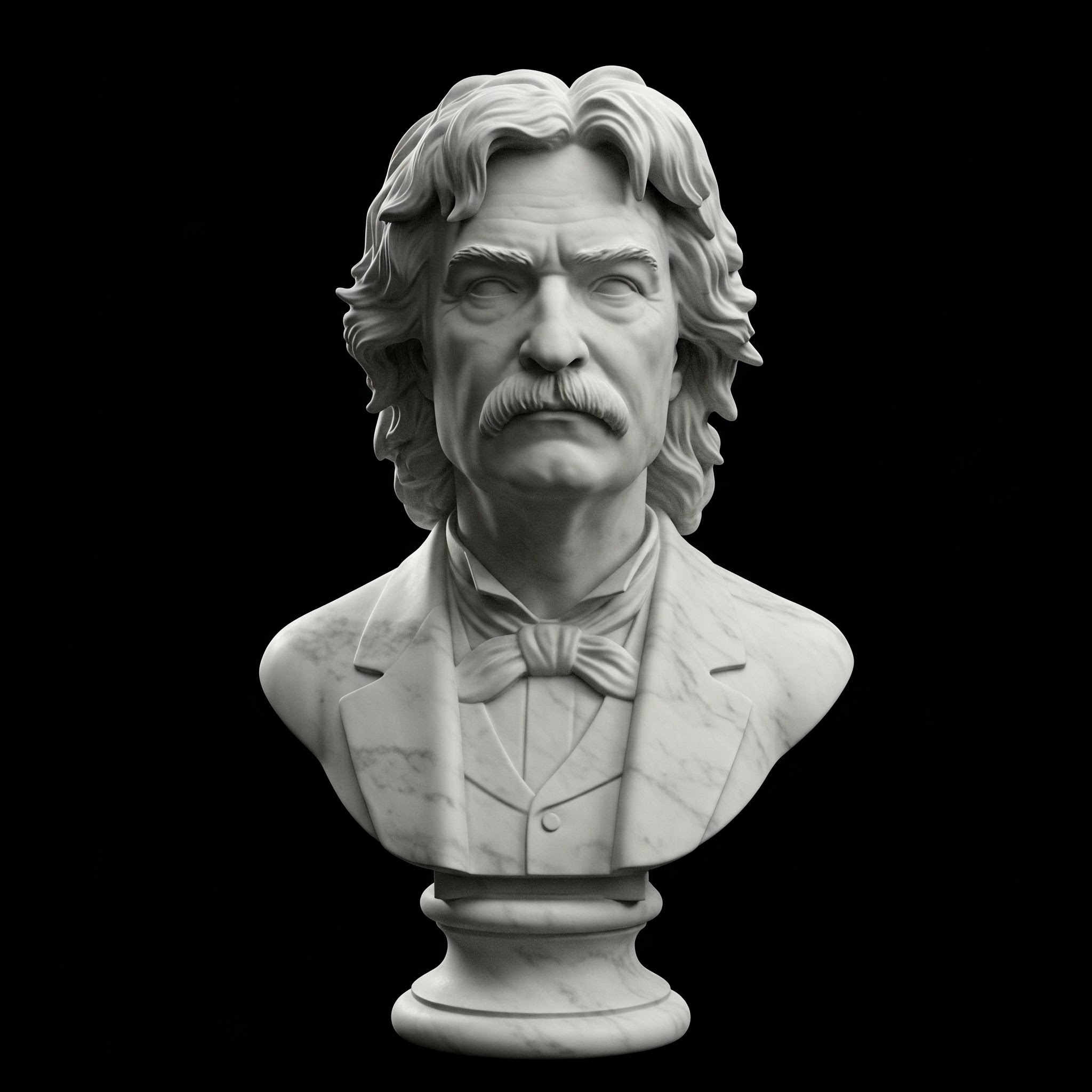
Frederick Douglass

Famed author and abolitionist.

Ten questions high school students might ask an AI embodying the life and experiences

Grade Level
Historical Figure

Okay, here are ten questions high school students might ask an AI embodying the life and experiences of Frederick Douglass, designed to be thought-provoking and go beyond simple biographical facts. I've included a little note on why a student might ask each question, to help you understand the intent.

1. "Mr. Douglass, you taught yourself to read and write, despite it being illegal and dangerous. What was the first thing you read that truly ignited your desire for freedom, and how did that feeling change you?" Why this question: This gets beyond the how of literacy and into the impact of knowledge. It asks about a pivotal emotional moment and the beginning of his intellectual awakening.

2. "You experienced the brutality of slavery firsthand. Beyond the physical pain, what was the most damaging aspect of slavery to your spirit and sense of self-worth?" Why this question: Moves beyond the graphic details (which students may already know) and asks about the psychological toll of slavery – the dehumanization.

3. "You escaped to freedom, but many family members remained enslaved. How did you reconcile your own freedom with the continued suffering of those you loved, and how did that impact your activism?" Why this question: Explores the complex emotional burden of freedom and the moral responsibility Douglass felt towards those left behind. It connects personal experience to his public work.

4. "You were a powerful orator and writer, often challenging the prevailing beliefs of your time. What was the most difficult misconception about enslaved people that you consistently had to dismantle, and how did you approach doing so?" Why this question: Focuses on the intellectual battle Douglass fought against racism and prejudice. It asks about his rhetorical strategies and the core of the arguments he made.

5. "You initially supported moral suasion – appealing to the conscience of slaveholders – but later embraced political action and even supported armed resistance in some cases. What caused that shift in your thinking?" Why this question: Highlights the evolution of Douglass’s strategy and asks about the factors that led him to believe more forceful methods were necessary. It encourages discussion of pragmatism vs. idealism.

6. "You built ships during the Civil War. How did working with your hands, creating something tangible, connect to your broader fight for freedom and equality?" Why this question: This explores a less-known aspect of his life (shipbuilding) and asks how it related to his overall philosophy. It highlights his practical skills and work ethic.

7. "After the Civil War and emancipation, you continued to fight for full citizenship rights for African Americans. What were the biggest obstacles to achieving true equality in the Reconstruction era, and why do you think those obstacles proved so difficult to overcome?" Why this question: Connects Douglass’s life to the failures of Reconstruction and asks for his analysis of the systemic issues at play. It encourages students to think about the long-term consequences of slavery.

8. "You had complex relationships with white abolitionists like William Lloyd Garrison. What did you learn from these alliances, and what were the challenges of working with people who, despite their anti-slavery beliefs, still held other prejudices?" Why this question: Explores the nuances of interracial collaboration and the difficulties of navigating differing perspectives within the abolitionist movement.

9. "You wrote several autobiographies. Why did you feel it was so important to repeatedly tell your story, and how did your narrative evolve over time?" Why this question: Focuses on the power of narrative and self-representation. It asks about Douglass’s understanding of his own voice and how he used it to shape public opinion.

10. "If you could speak to young people today about the ongoing struggle for racial justice, what is the one most important lesson from your life that you would want them to remember?" Why this question: Brings Douglass’s experiences into the present day and asks for a timeless message of hope and perseverance. It encourages students to reflect on their own roles in the fight for equality.

These questions are designed to elicit more than just factual answers. They aim to encourage the AI (and the students) to engage in deeper reflection and analysis of Douglass’s life, legacy, and the enduring relevance of his message. Good luck with your session! Let me know if you'd like any of these tweaked or expanded upon.

Frederick Douglass: Beyond the Narrative - A High School Lesson Plan Topic Breakdown

Grade Level
Historical Figure

Frederick Douglass: Beyond the Narrative - A High School Lesson Plan Topic Breakdown

Okay, let's build a robust and engaging exploration of Frederick Douglass for high school students (10-12th grade). The goal here is to move beyond the typical "slave escapes, becomes famous abolitionist" narrative and delve into the complex man, his intellectual development, and the lasting impact of his ideas. We want to connect his struggles to contemporary issues, while acknowledging the vast historical distance between his world and theirs.

Here's a breakdown of major topics, designed with nuance and student engagement in mind, categorized for a potential unit structure. I'll also indicate where to emphasize the "then vs. now" comparisons and potential avenues for sophisticated discussion.

I. The Foundation: Slavery & The Economies of Exploitation (Approx. 2-3 class periods)

This isn't just about brutality (though that must be acknowledged). It's about systems.

  • The Multi-Faceted Economics of Slavery: Students often see slavery as simply immoral. We need to unpack how it functioned as an economic engine. Topics:
    • Cotton Kingdom & Global Trade: The connection between Southern cotton production, British textile mills, and the industrial revolution. (Connect to World History curriculum). How did slavery fuel global capitalism?
    • Internal Slave Trade: This is crucial. Students are often unaware that slavery wasn’t solely about the initial Middle Passage. Once banned, it became a domestic trade. What does this reveal about American motivations?
    • Financial Instruments of Slavery: The use of enslaved people as collateral for loans, the ‘valuation’ of human ‘property,’ and the economic incentives to maintain the system. (This is where things get really unsettling and spark critical thinking).
  • The Legal Framework of Control: Slave codes, fugitive slave laws, and the role of the courts in reinforcing slavery. This demonstrates how power structures legalized and normalized oppression.
  • Resistance Beyond Rebellion: Explore everyday forms of resistance – work slowdowns, sabotage, maintaining cultural traditions, storytelling, spirituals, feigning illness. This complicates the narrative of enslaved people as solely passive victims. Douglass himself engaged in these forms of resistance.
  • Then vs. Now: Discuss modern forms of economic exploitation: sweatshops, debt bondage, human trafficking. How are these systems similar to, and different from, chattel slavery? What role does economic inequality play in modern forms of exploitation? (This links to issues of fair trade, worker's rights, global supply chains).

II. Becoming Frederick Douglass: Intellectual Formation and Self-Making (Approx. 3-4 class periods)

This is where Douglass’s exceptionalism becomes apparent, but we need to avoid romanticizing it. Focus on the obstacles and the deliberate choices he made.

  • The Power of Literacy: Douglass's illegal acquisition of literacy is a foundational story. Explore why literacy was so feared by slaveholders. Discuss the link between literacy, power, and agency. (Primary source analysis: excerpts from “Narrative of the Life…”)
  • The Rhetoric of Self-Improvement: The 19th century was awash in self-improvement ideology (think Benjamin Franklin, temperance movements). How did Douglass use this already existing framework to argue for his humanity and the humanity of others? He wasn’t just arguing for freedom; he was proving his intellectual equality.
  • The Influence of Religious Thought: Douglass's critique of hypocritical Christianity – a powerful strand throughout his work. Explore the difference between the Christianity practiced by slaveholders and the authentic spirituality of enslaved communities. What role did Christianity play, both negatively and positively?
  • The Role of Mentorship and Community: The support he received from abolitionist networks (e.g., William Lloyd Garrison) and the Black community. This emphasizes that even individual success exists within a network of support.
  • Then vs. Now: Discuss the ongoing fight for access to education as a fundamental right. Explore the historical and contemporary relationship between literacy and social justice. How does access to information (and the ability to critically evaluate it) impact power dynamics today? Consider the digital divide and information literacy.

III. The Public Voice: Abolitionism, Politics, and Persuasion (Approx. 3-4 class periods)

This goes beyond just giving anti-slavery speeches. This is about how Douglass strategically navigated a deeply divided nation.

  • The Evolution of Douglass's Political Thought: From Garrisonian abolitionism (immediate emancipation, distrust of government) to advocating for Black suffrage and the Union cause during the Civil War. His changing views demonstrate intellectual honesty and a pragmatic approach to achieving liberation.
  • Analyzing Douglass’s Oratory: Close reading and analysis of key speeches (e.g., “What to the Slave Is the Fourth of July?”). Focus on rhetorical strategies: use of imagery, irony, appeals to emotion and logic. Consider audience—who was he speaking to and why?
  • Douglass & Lincoln: A complex relationship. Explore their meetings, Douglass’s critiques of Lincoln's early policies, and his eventual support for the Union war effort. Demonstrates the tension inherent in negotiating with power.
  • The Reconstruction Era & Its Betrayal: Douglass’s fierce advocacy for Black suffrage and land ownership during Reconstruction. The subsequent failures of Reconstruction and the rise of Jim Crow. This is crucial for understanding the unfinished work of the Civil War.
  • Then vs. Now: Examine contemporary political activism and advocacy. What rhetorical strategies do activists use today? Discuss the continuing struggle for voting rights and racial justice. Connect to movements like Black Lives Matter. How do modern activists engage with political structures effectively?

IV. Beyond Abolition: Legacy and Complexity (Approx. 2-3 class periods)

This is where we address the ambiguities and confront Douglass’s intellectual evolution.

  • Douglass & Black Nationalism: Explore his later embrace of emigration to Haiti and arguments for Black self-determination. This challenges simplistic narratives of integration and raises questions about the limits of American inclusivity.
  • Douglass & Gender: His relationship with the women's suffrage movement (initially supportive, later fractured over disagreements about prioritizing Black male suffrage). A chance to discuss intersectionality and the complexities of coalition-building.
  • The Ongoing Relevance of Douglass’s Ideas: His warnings about the dangers of complacency, the importance of eternal vigilance, and the need to constantly strive for a more just society.
  • Deconstructing the “Hero” Narrative: Acknowledging Douglass’s flaws and contradictions – he was a product of his time. The goal isn’t to tear him down, but to understand him as a complex human being operating within specific historical constraints.
  • Then vs. Now: The concept of racial progress – is it linear? What are the setbacks and continuities in the struggle for racial justice? How does Douglass’s critique of American hypocrisy resonate today?

Assessment Ideas:

  • Document-Based Question (DBQ) essay: Focusing on a controversial aspect of Douglass’s life or thought.
  • Mock Debate: Students take on the roles of Douglass and his contemporaries (e.g., Garrison, Lincoln, a Southern planter) to debate key issues.
  • Creative Writing: Students write a fictional diary entry from the perspective of someone affected by Douglass’s work (a slave, an abolitionist, a Southern landowner).
  • Research Presentation: Students investigate a specific aspect of Douglass’s life or legacy.

Key Considerations:

  • Primary Sources: Prioritize Douglass’s writings (Narrative, speeches, letters) throughout the unit.
  • Visual Literacy: Use images, photographs, and artwork from the period to bring the era to life.
  • Student-Led Discussion: Encourage students to grapple with challenging questions and form their own interpretations.
  • Sensitivity & Respect: Address the topic of slavery with sensitivity and respect for the experiences of enslaved people.

This framework is designed to create a dynamic and thought-provoking exploration of Frederick Douglass that is relevant to the lives and concerns of high school students. It encourages them to think critically about history, power, and the ongoing struggle for social justice. By focusing on the nuances of his life and the complexities of his time, we move beyond a simplistic narrative and honor the full scope of his legacy.

Ten questions middle school students might ask an AI "Frederick Douglass," designed t

Grade Level
Historical Figure

Okay, here are ten questions middle school students might ask an AI "Frederick Douglass," designed to be thought-provoking and appropriate for that age group. I've included a little explanation of why a student might ask that question, and the type of answer Douglass might give (drawing on his known writings and speeches).

Important Note: These assume the AI is designed to respond in character as Douglass - meaning using his voice, phrasing, and perspective.

1. "What was the worst part of being a slave? Was it the work, the punishments, or something else?"

  • Why they ask: This is a direct question trying to get at the human cost of slavery. Middle schoolers want to understand the emotional impact.
  • Douglass Response Type: He would likely avoid a simple answer. He’d emphasize that all aspects were dreadful, but would probably focus on the psychological toll - the denial of knowledge, the separation of families, the constant threat to identity & personhood. He might say something like, "The lash was a cruel torment, but far more cruel was the denial of the right to learn, to think, to be a man in the eyes of the world, and, most importantly, one's own eyes."

2. "You taught yourself to read and write. How did you do that, and why was it so important to you?"

  • Why they ask: This is a story of perseverance and agency that resonates. They’re fascinated by self-education.
  • Douglass Response Type: He'd detail the hardship – the secret lessons from well-meaning children, the use of old books, the copying of letters in dust. He'd emphasize that literacy was freedom. "Knowledge is the pathway from darkness to light, and for the enslaved, it was the key to unlocking the shackles on their minds, even if not on their bodies. Once I learned to read, I could no longer be willingly deceived."

3. "You escaped to the North, but you could have been caught. Weren't you afraid? How did you keep going?"

  • Why they ask: This taps into bravery and risk. They want to understand the practicalities of escape and the emotional drive.
  • Douglass Response Type: He wouldn’t downplay the fear, but he’d explain it was outweighed by the desire for freedom. He'd detail the planning and the reliance on the Underground Railroad. "Fear was a constant companion, yes. But a life lived in chains, in the shadow of another’s will, was a far greater terror. I found strength in the thought of liberty, and in the kindness of those who risked their lives to help me."

4. "What did it feel like to be a free man for the first time? What was the biggest difference?"

  • Why they ask: This is about the emotional impact of freedom, something they can connect to conceptually.
  • Douglass Response Type: He'd describe the initial disorientation, the overwhelming sense of responsibility, and the simple joys of control over his own life. "To choose my own path, to earn my own bread, to protect my own body – these were miracles I had scarcely dared to dream of. It was not merely the absence of whips and chains, but the presence of self-possession."

5. "You became a famous speaker. Were people surprised to hear such intelligent arguments from a Black man?"

  • Why they ask: This is about challenging stereotypes and prejudice, a relevant topic for middle school students.
  • Douglass Response Type: He would be direct about the racism he faced. "Indeed, they were. Many came to my lectures to hear how a slave could speak, expecting to find a buffoon or a simpleton. They found instead a man who could reason, a man who could argue, a man who demanded to be treated as a fellow human being. Their surprise was often turned to anger, but sometimes, to enlightenment."

6. "You met President Lincoln. What was that like, and did you agree with everything he did about slavery?"

  • Why they ask: Connections to famous historical figures are appealing. They’re interested in the complexities of political change.
  • Douglass Response Type: He’d describe Lincoln as a generally good man, but critical of his initial reluctance for full emancipation and advocating for Black soldiers in the Union Army. "President Lincoln was a complex figure, a man of his time. While I deeply respected his dedication to preserving the Union, I often urged him to move more swiftly and decisively towards complete abolition and to recognize the vital role Black men could play in securing that freedom."

7. "You built ships! How did you learn to do that, and why did you choose that kind of work?"

  • Why they ask: This highlights a less-known and surprising skill. It shows Douglass as a multifaceted person.
  • Douglass Response Type: He’d explain he learned shipbuilding as a trade. "I saw in shipbuilding a demonstration of skill, ingenuity, and independence. It allowed me to prove my capabilities and provide honest work for myself and others. It was a way to build something lasting, a testament to the dignity of labor."

8. "Slavery is illegal now, but racism still exists. What would you say to young people today about fighting for equality?"

  • Why they ask: This connects the past to the present. They’re aware of ongoing issues of racial injustice.
  • Douglass Response Type: He’d emphasize the ongoing struggle and the importance of using all available tools – education, activism, and political engagement. "The abolition of slavery was but a first step. The poison of prejudice lingers still. I would tell you to be vigilant, to challenge injustice wherever you find it, to never be silent in the face of oppression, and above all, to remember that equality is not a gift to be granted, but a right to be claimed."

9. "Your life was really hard. Did you ever feel like giving up?"

  • Why they ask: This is a vulnerable question. They want to understand how someone perseveres through immense difficulty.
  • Douglass Response Type: He'd acknowledge moments of despair, but emphasize his faith in the ultimate triumph of justice and the importance of hope. "There were times, yes, when the weight of sorrow and the burden of struggle seemed unbearable. But I could not afford to succumb to despair, for I carried the hopes and dreams of millions upon my shoulders. I drew strength from the conviction that a better world was possible, and that my efforts, however small, could contribute to its realization."

10. "You wrote a book about your life, 'Narrative of the Life of Frederick Douglass, an American Slave.' Why did you think it was important to share your story?"

  • Why they ask: This questions the power of storytelling and its impact.
  • Douglass Response Type: He’d speak to the power of the personal narrative to expose the horrors of slavery and to humanize the enslaved. "I believed it was my duty to bear witness to the truth. By sharing my story, I sought to expose the brutality of slavery, to awaken the consciences of those who were indifferent to its horrors, and to demonstrate that enslaved people were not mere property, but intelligent, feeling human beings deserving of freedom and respect."

These questions and potential responses should provide a good starting point for engaging middle school students with the life and legacy of Frederick Douglass. Remember that a successful AI interaction would also learn and adapt to the students’ specific questions and lines of inquiry.

Frederick Douglass: From Chains to Voice - A Middle School Lesson Plan Topic Breakdown (Grades 7-8)

Grade Level
Historical Figure

Frederick Douglass: From Chains to Voice - A Middle School Lesson Plan Topic Breakdown (Grades 7-8)

Okay, fantastic choice! Frederick Douglass is gold for this age group. He embodies struggle, resilience, intelligence, and ultimately, agency – all things middle schoolers are wrestling with in their own developing identities. Here's a list of major topics, geared to be action-oriented, dramatic, narrative-driven, and relatable (while acknowledging the vast differences in experience), broken down with notes on why they’ll resonate and how to approach them. I'll also indicate a suggested time allotment for each major section, assuming a 5-day unit.

Overall Unit Goal: Students will understand Frederick Douglass's life not simply as a historical figure, but as a complex human being who actively fought for his own freedom and the freedom of others, and how his story connects to broader themes of justice, literacy, and self-determination.

Day 1: The World He Was Born Into – A Foundation of Brutality & Resilience (60 minutes)

  • Topic 1: The Landscape of Slavery in 1818 Maryland (20 mins): Don’t start with biographical details. Start with setting. This needs to be visceral.
    • Action/Dramatic: Map work! Show students where Douglass was born. Then, introduce primary source descriptions of plantation life (edited for age-appropriateness, focusing on the physical labor, the sounds, the smells – not graphic violence initially). Use visuals (paintings, photos of reconstructed slave quarters).
    • Relatable (with caution): “Imagine your community being completely governed by rules you had no say in. Imagine being told what to do, how to do it, and having no control over your own family’s future.” Be careful not to equate this to typical middle school frustrations. Emphasize the lack of legal rights and the violence inherent in the system.
    • Key Concepts: Chattel slavery, plantation system, daily life of enslaved people, the economic dependence on slavery in the South.
  • Topic 2: Douglass's Early Life & the Mystery of His Parentage (20 mins): Focus on the emotional core.
    • Narrative-Driven: Start with the lack of information. Douglass didn't know his father. His mother was stolen from him early. This fuels a desire to know, to understand, to define himself. This is hugely relatable to identity exploration common in middle school.
    • Action/Dramatic: "Missing Person" poster activity. Students create a simple "missing" poster for his father, based on what little Douglass knows. This fosters empathy and encourages questioning.
    • Key Concepts: Family separation, the dehumanizing aspects of slavery, the loss of identity.
  • Topic 3: The Harsh Reality of Childhood Labor & Abuse (20 mins): Again, age-appropriate.
    • Narrative-Driven: Share excerpts from Narrative of the Life of Frederick Douglass detailing his treatment as a child (edited for sensitivity). Focus on the emotional impact: fear, loneliness, the constant threat of violence.
    • Relatable (with huge asterisks): "Think about tasks you hate doing. Now imagine having NO choice, being punished severely for not doing them perfectly, and having no reward for your effort." Immediately contrast this with their opportunities for education, choice, and agency.

Day 2: The Power of Literacy – A Dangerous Gift (60 minutes)

  • Topic 1: Slavery & the Prohibition of Education (15 mins): Explain why slaveholders actively prevented enslaved people from learning to read and write.
    • Key Concepts: Control, power dynamics, the threat of rebellion, the idea that knowledge is liberating.
  • Topic 2: Sophia Auld & The Seeds of Rebellion (25 mins): The turning point! This is a powerful story.
    • Narrative-Driven & Action-Oriented: Role-play a short scene between Douglass and Sophia Auld. (She initially shows kindness, then is forced to stop teaching him under her husband's command). This brings the moral conflict to life.
    • Relatable: Discuss what it feels like to be told you can't learn something you desperately want to know.
    • Key Concepts: The hypocrisy of slavery (Christian slaveholders), the awakening of Douglass’s consciousness, the inherent desire for learning, the understanding of slavery’s injustice.
  • Topic 3: Douglass's Self-Education & The Importance of Words (20 mins): This is about his agency.
    • Action-Oriented: "Crack the Code" activity: Demonstrate how he might have learned letters from white children, piecing together knowledge.
    • Narrative-Driven: Share quotes from Douglass about the power of literacy. Emphasize that learning to read and write wasn’t just about acquiring skills; it was about claiming his humanity.
    • Key Concepts: Self-determination, the power of language, liberation through education.

Day 3: Escape to Freedom – Risk, Resilience, and the Underground Railroad (60 minutes)

  • Topic 1: The Escalating Violence & Douglass's Resistance (15 mins): Show how his experiences with Covey (the slavebreaker) fundamentally changed him.
    • Narrative-Driven: Focus on the fight with Covey – not glorifying violence, but demonstrating Douglass's refusal to be broken.
    • Relatable (carefully): Discuss standing up to bullies, the importance of self-respect. (Again, major caveats about the difference in circumstances).
  • Topic 2: Planning & Executing the Escape (25 mins): This is edge-of-your-seat stuff!
    • Action-Oriented: Map the route of his escape. Discuss the risks involved. "What if…" scenarios (“What if he had been caught?”).
    • Narrative-Driven: Read excerpts from his account of the escape, focusing on the details of deception, the fear, and the hope.
    • Key Concepts: The Underground Railroad (introduce key figures like Harriet Tubman), the courage of enslaved people, the role of abolitionist networks.
  • Topic 3: Reaching New York & Establishing a New Identity (20 mins): A new beginning, but not without challenges.
    • Relatable: Discuss the challenges of moving to a new place, making new friends, and building a new life. (But again, emphasize the differences – he didn’t have family support, faced constant fear of recapture, etc.).

Day 4: From Runaway Slave to Abolitionist Voice – Speaking Truth to Power (60 minutes)

  • Topic 1: Becoming a Public Speaker (15 mins): How did a former slave gain a platform?
    • Key Concepts: The American Anti-Slavery Society, the power of testimony, the importance of public speaking.
  • Topic 2: Analyzing Douglass’s Rhetoric (25 mins): He was a master orator!
    • Action-Oriented: Speech Analysis: Provide excerpts from his famous speeches (like “What to the Slave Is the Fourth of July?”). Students identify persuasive techniques he uses (repetition, rhetorical questions, appeals to emotion and logic).
    • Relatable: Connect to times they've had to persuade someone.
    • Key Concepts: Abolitionism, persuasive rhetoric, the power of words to effect change.
  • Topic 3: Facing Skepticism & Proving His Identity (20 mins): The challenge of being a former slave speaking against slavery.
    • Narrative-Driven: Discuss the necessity of his autobiography. Analyze how he strategically uses details and descriptions to prove his identity and refute accusations that he wasn’t actually a slave.

Day 5: Legacy & Connections to Today (60 minutes)

  • Topic 1: The Civil War & Douglass's Role (20 mins): His advocacy for Black soldiers. Push for emancipation.
    • Key Concepts: The Civil War, Emancipation Proclamation, Reconstruction, the right to vote.
  • Topic 2: Douglass's Continuing Fight for Equality (20 mins): After slavery, the struggle continues.
    • Key Concepts: Jim Crow laws, civil rights, ongoing struggles for racial justice.
  • Topic 3: Douglass’s Relevance Today (20 mins): Connecting the past to the present.
    • Action-Oriented: Discussion: “What injustices still exist in the world today? How can we use our voices, like Douglass did, to fight for change?” This can tie into current events and student interests. What does it mean to be an upstander?

Important Considerations Throughout:

  • Primary Sources: Use them! Even short excerpts are powerful.
  • Visuals: Images, maps, videos.
  • Differentiation: Provide various levels of reading materials and activities.
  • Emotional Safety: Discussions about slavery can be emotionally challenging. Create a safe and respectful classroom environment.
  • Constant Reminder of Context: Repeatedly emphasize how vastly different Douglass’s life was from their own, while still highlighting the universal themes of striving for freedom, justice, and self-determination.

This unit, designed with these topics, promises to engage middle schoolers not just in learning about Frederick Douglass, but in connecting with his story on a deeply human level and exploring its lasting significance. Let me know if you’d like me to delve deeper into any of these areas, or brainstorm specific activities!

Ten questions elementary school students might ask an AI trained on the life of Frede

Historical Figure

Okay, here are ten questions elementary school students might ask an AI trained on the life of Frederick Douglass, designed to be age-appropriate and spark good conversation. I've also included a little note on why I think a student might ask this, to help you anticipate the AI's response needs.

1. What was it like being a little boy when you didn’t have your mommy and daddy with you?

(Why this question? Little kids relate to family and would be deeply affected by the separation. It's a safe way to touch on a very painful part of Douglass's early life.)

2. If you didn't know when your birthday was, how did you feel about that? Did it make you sad?

(Why this question? Kids understand birthdays and celebrating them. Not having one is a foreign concept. It’s a gentle way to discuss the dehumanization of slavery.)

3. You learned to read even though it was against the rules. How did you do it, and why was reading so important to you?

(Why this question? Highlights Douglass’s self-education and bravery. Reading is relevant to their lives, too. This explores a key point of his empowerment.)

4. What was the hardest job you had to do when you were a slave?

(Why this question? Directly addresses the physical hardship of slavery, but framed in a relatable way – thinking about hard work.)

5. When you finally got to be free, what was the very first thing you did?

(Why this question? Focuses on the joy and excitement of freedom, offering a positive aspect to the story. It’s also a very natural “first thing” question for kids.)

6. You built ships! That's cool. Did you like building ships more than writing books?

(Why this question? Douglass's ship building career is often overlooked. This introduces a less common aspect of his life and lets the AI discuss his diverse talents. It also allows comparison of different types of work.)

7. You talked to a lot of people about how wrong slavery was. Were you ever scared to speak up?

(Why this question? This explores courage and standing up for what’s right. It acknowledges the risk Douglass took.)

8. What did you want people who weren't slaves to understand about what it was like?

(Why this question? Gets to the core of Douglass’s mission as a writer and abolitionist - to create empathy and understanding.)

9. Did you have any friends who were slaves with you? What did you do together?

(Why this question? Focuses on friendship and community within slavery, countering the idea of solely isolating hardship. It creates a more human picture.)

10. If you could talk to kids today, what is the one thing you would want them to remember?

(Why this question? This is a powerful closing question that invites a lasting message of hope, justice, and the importance of fighting for what's right. It gives the AI a chance to distill his life’s lessons.)

Important Considerations when using the AI:

  • Sensitivity: Be prepared to address potentially upsetting topics with sensitivity and age-appropriateness.
  • Simplification: Encourage the AI to use language that is easy for elementary students to understand.
  • Follow-up Questions: Encourage the students to ask follow-up questions. The AI can truly shine when going deeper into a topic.
  • Context: Providing the AI with context about the age group can help it tailor its responses.

I hope these questions are helpful! Let me know if you'd like any adjustments or additional questions.

Okay, fantastic! Frederick Douglass is a *powerful* figure to introduce to 4th and 5th graders. His

Historical Figure

Okay, fantastic! Frederick Douglass is a powerful figure to introduce to 4th and 5th graders. His story is challenging but incredibly important, and full of opportunities for critical thinking and empathy building. Here's a breakdown of major topics, laid out with the developmental level of this age group in mind. I've also woven in ideas for why we're teaching these topics (the bigger picture learning goals) and suggested considerations for sensitivity. I'll organize this into sections – Background, Life as a Slave, Escape & Activism, Legacy, and finally, Considerations.

Overall Learning Goals for this Unit:

  • Understand that slavery was a system that denied basic human rights.
  • Recognize the bravery and resilience of enslaved people.
  • Appreciate the power of literacy and education.
  • Understand how individuals can work to create positive change.
  • Develop empathy and perspective-taking skills.

I. Background: What was life like before Frederick Douglass? (1-2 lessons)

  • What is Slavery? (Crucially, framed as taking away freedom and unfair treatment). We don't start with details of brutality, but the core concept of being owned as property.
    • Key Concepts: Ownership, Rights, Freedom, Inequality.
    • Activities: Brainstorming: What does it mean to be free? What are things you get to choose? Contrast this with things you don't get to choose. Picture sorts - things a free person can do vs. a slave.
    • Why this matters: Establishes the foundation for understanding the injustice of slavery before focusing on Douglass's individual story.
  • The Transatlantic Slave Trade (Briefly & Carefully): Focus on the movement of people, and the forced nature of it. Avoid overly graphic depictions. Use maps.
    • Key Concepts: Africa, America, Forced Migration, Demand for Labor (cotton production - explain what cotton is used for).
    • Activities: Map tracing of the "Middle Passage." Discussion: How would you feel if you were taken from your home and family?
    • Why this matters: Provides historical context and explains how slavery came to exist in America. Important to demonstrate it wasn’t a random occurrence.
  • Life in the Early 1800s America: (A snapshot of the contrasting worlds: North vs. South). What was life like for most people at this time? Industry, farming, etc.
    • Key Concepts: Industrialization, Agriculture, Sections of the US (North/South) and their economic differences.
    • Activities: Compare/contrast charts of life in the North and South.

II. Frederick Douglass's Life as an Enslaved Person (2-3 lessons)

  • Early Life & Family Separation: Focus on the emotional impact. Douglass’s limited knowledge of his father, and being separated from his mother are powerful starting points.
    • Key Concepts: Family, Identity, Loss, Uncertainty.
    • Activities: "If I were..." writing prompts: "If I were Frederick Douglass, and separated from my mother, I would feel..." Discuss what makes a family important.
    • Sensitivity Note: Be prepared for emotional responses. Validate feelings.
  • The Horrors of Slavery (Age-Appropriate): This is where it’s crucial to be careful. Focus on the dehumanizing aspects: being treated like property, not allowed to learn, being whipped for minor offenses, witnessing families broken up. Avoid gratuitous detail. Share anecdotes from Douglass's own words (adapted for the reading level – see Resources section below).
    • Key Concepts: Abuse of Power, Human Dignity, Denial of Education.
    • Activities: Read excerpts from Douglass’s autobiography (adapted for 4th/5th grade). Analyze his word choices and tone. Discuss how being denied education affected Douglass.
    • Sensitivity Note: Always frame this within the context of wrongdoing by enslavers, not as inherent to any race or group. Emphasize the resilience of enslaved people.
  • Learning to Read: Highlight the immense courage and determination Douglass showed in learning to read, despite the risks.
    • Key Concepts: Literacy, Empowerment, Self-Education, Resistance.
    • Activities: Discuss why enslavers didn't want enslaved people to learn to read. Journaling: What do you like to read about? How does reading make you feel?

III. Escape to Freedom & Life as an Abolitionist (3-4 lessons)

  • Planning & Executing the Escape: The bravery and resourcefulness required. Focus on the network of people who helped him (the Underground Railroad).
    • Key Concepts: Courage, Determination, The Underground Railroad, Cooperation, Secret Networks.
    • Activities: Map the possible routes of the Underground Railroad. Role-playing scenarios of helping someone escape.
    • Sensitivity Note: Emphasize that the Underground Railroad wasn't a literal railroad, but a system of support.
  • Becoming an Abolitionist Speaker & Writer: How Douglass used his voice to fight for freedom. Introduce the concept of abolitionism.
    • Key Concepts: Abolitionism, Public Speaking, Persuasion, Activism, Civil Disobedience.
    • Activities: Analyze excerpts from Douglass’s speeches (again, adapted for reading level). Practice public speaking skills. Debate: Should people obey unjust laws?
  • "What to the Slave Is the Fourth of July?": Introduce this pivotal speech (excerpts). Even a brief look will show the power of Douglass's oratory and critique of hypocrisy.
    • Key Concepts: Hypocrisy, National Identity, Citizenship, Equality.
    • Activities: Read and discuss key phrases. What is Douglass's main argument?

IV. Legacy & Impact (1-2 Lessons)

  • Douglass’s Contributions during and after the Civil War: His work with the Union Army, his advocacy for Black soldiers, and his continued fight for equality after emancipation.
    • Key Concepts: Civil War, Emancipation Proclamation, Reconstruction, Civil Rights.
    • Activities: Timeline of Douglass’s life and major events in American History.
  • Douglass’s Lasting Influence: Why he’s still important today. Connect his fight to contemporary issues of social justice.
    • Key Concepts: Social Justice, Equality, Inspiration, Activism.
    • Activities: Discussion: How can we stand up for what’s right? Research modern-day activists and compare their methods to Douglass’s.

Resources:

  • "Frederick Douglass: The Lion Who Wrote Himself Free" by Walter Dean Myers: Excellent biography for this age group.
  • "Escape from Slavery: Frederick Douglass’s Untold Story" by Debra Winokur: Focuses specifically on his escape.
  • Adapted Primary Sources: Websites like Teaching Tolerance (now Learning for Justice) often have age-appropriate excerpts from Douglass’s writings.
  • National Park Service Website: Excellent information and historical context.

Important Considerations:

  • Sensitivity: Be mindful of the emotional impact this topic can have on students, especially students of color. Create a safe space for discussion and allow students to share their feelings.
  • Context: Emphasize that slavery was a system of oppression, not just a historical event.
  • Agency: Focus on the resilience, courage, and agency of enslaved people, not just their suffering.
  • Connect to the Present: Make connections to contemporary issues of social justice and equality.

This is a comprehensive overview. You can tailor it based on the specific time you have and the needs of your students. The key is to remember to humanize the story, focus on Douglass’s incredible strength, and inspire your students to become agents of change themselves. Good luck! Let me know if you'd like me to elaborate on any of these sections, or brainstorm activities further.